The Elephant in the Room
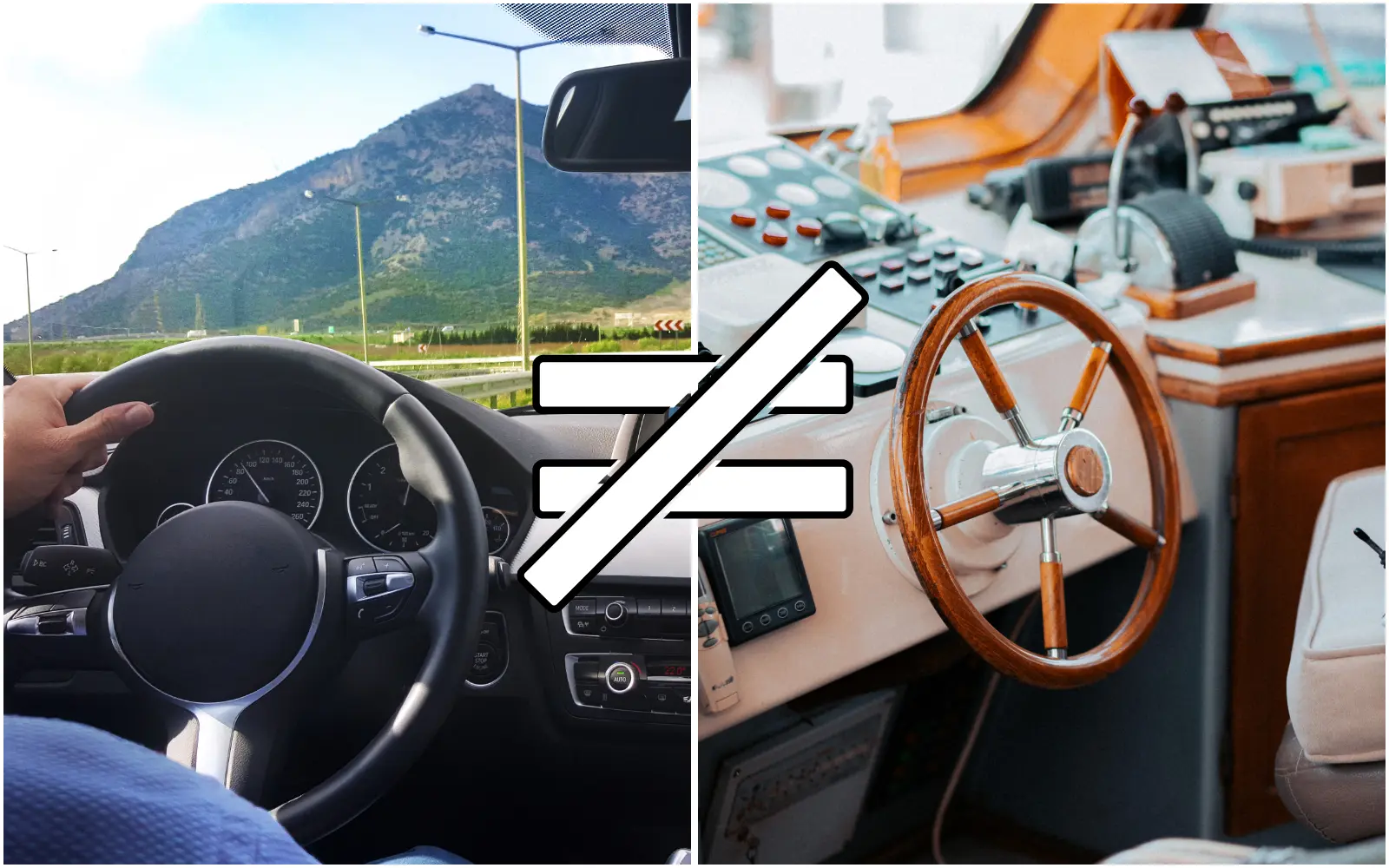
There is a persistent myth in the boating world—an elephant in the room. It gets spread easily without even trying because it’s built on an innocent assumption. When average folks who have never operated a boat before look at that friendly-looking helm station with its familiar steering wheel and think, “It resembles the driver’s seat of a car; I could drive that,” it’s an assumption based on a superficial similarity. They aren’t entirely wrong, but docking and undocking, managing momentum, and operating within boating laws and international navigational norms—some of which are hundreds of years old—require skills and specific knowledge not covered in drivers’ ed. Boats are not cars. Boats don’t behave like cars. Experience and education are essential for safe operation.
Boats Don’t Have Brakes
The first concept to contend with is simple: boats don’t have brakes. They don’t stop on a dime. Sir Isaac Newton oversees their behavior with his laws of motion. Slowing a vessel requires opposing thrust, typically applied via reverse gear, and heavier vessels take longer to decelerate. My 60,000-pound fully loaded DeFever Offshore Cruiser, for example, requires careful planning to stop alongside a dock or bulkhead from a top speed of 9 knots (10.4 MPH). The approach must be slow enough to avoid collision or allision (collision is two moving vessels hitting each other; allision is a vessel hitting a stationary object, including a dock or docked boat), followed by a burst of reverse lasting ten seconds or more, depending on current, wind, and the vessel’s momentum. Smaller boats stop faster; larger vessels require more distance, and large ships far more.
Respecting Scale and Hydrodynamics
Many dangerous situations on the water stem not from recklessness but from a lack of knowledge or basic skill. Large ships cannot see smaller vessels close aboard if they are out of line of sight of the bridge. Approaching a ship that’s underway, cutting it off, or crossing in front of it introduces extreme risk. Because hydrodynamic forces naturally conspire to draw two vessels on parallel courses toward each other, an engine failure or fouled prop near a large vessel can allow a smaller boat to be drawn toward the ship, including into its propellers. Large commercial vessels may take miles to slow from even modest speeds—and if they never see a smaller vessel they might not even know if the worst happens. Even if they see small boats operating too close aboard, these ships cannot simply “slam it into reverse.” Engines often require time to stop and restart in astern, and cargo ships rarely have transmissions. The physics and scale involved demand respect.
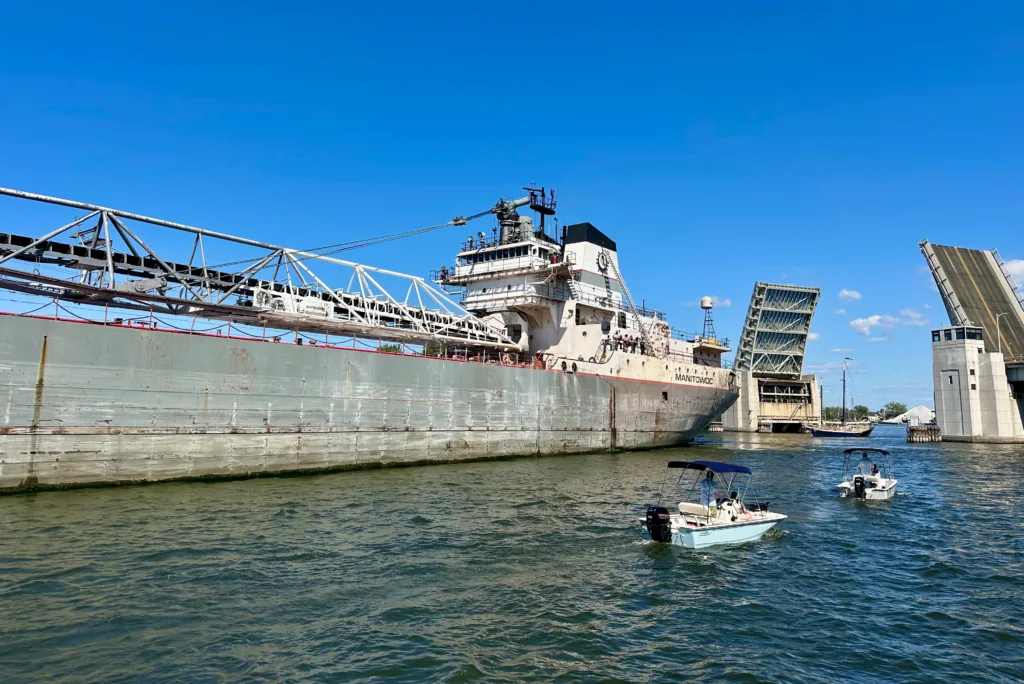
Photo taken by Dave Rowe.
Water Is Never Still
Water is rarely still. Wind, current, tide, wakes, and vessel momentum interact in ways that are difficult to predict. Boats navigate on a fluid—more like driving a car on ice than on pavement. They drift, slide, and get pushed around. Vessel control is illusory until lines are made. Leaving the helm before lines are secure is a common rookie mistake. Once control is lost, it can be regained more quickly if the helm remains attended, but walking away from the helm creates a critical vulnerability.
A Close Call
Even experienced mariners, including myself, sometimes find controlling their vessel approaching the limit of their skill. One launch after a winter layup brought this into sharp focus. It was a windy day in a crowded marina, and I hadn’t been at the helm in nine months. The 40-foot vessel was dropped in by marina staff, and I was on my own. Backing into a tight fairway and spinning the boat 180° in a 30 MPH crosswind tested every ounce of latent skill and muscle memory I had. The wind wanted to pin the boat to a nearby dock or sideswipe another vessel. After nearly a year away from the helm, I was rusty and my maneuvers felt awkward and unfamiliar.
It was a close call, and the only thing that kept the boat safe was latent experience that had mostly become second nature over time. For a new boater being dropped into a similar situation, the day would certainly have ended badly, and insurance consequences would have followed quickly. That day reinforced a truth for me that can’t be learned in a classroom: vessel handling is not about luck or confidence. It is about knowledge, practice, and familiarity with how a boat responds to wind, current, and momentum—skills that take time to develop and must be maintained.
Insurance and Ownership Reality
Training matters because legal requirements alone are insufficient. A yacht can be purchased through a transaction similar to a real estate closing, without any prior boating experience. These vessels are complex, expensive, heavy, and capable of serious harm.
Insurance adds another wrinkle. Policies are often required to be secured before closing to complete a brokered and/or financed yacht sale, and qualifying for a yacht policy is not guaranteed for inexperienced operators. Some underwriters require documented training, experience, or professional supervision—especially for large vessels. Others issue policies if higher premiums, deductibles, or restrictions are acceptable. Insurance approval, however, does not confer operational competence—it simply reflects the financial risk deemed acceptable to the underwriters under the terms.
Owning and insuring a boat does not automatically make someone capable of operating it safely. I have seen it myself—a captain sideswiped a docked vessel right in front of me while waiting for a lock on the Erie Canal. He dropped a line to the damaged vessel and started peeling off hundred-dollar bills from a wad in his pocket to avoid an insurance claim. When the skipper of the crunched vessel felt enough money changed hands, he held up his hand to end the transaction, and everyone went on their way. Later, I walked over and asked about what happened. $5,000 in cash changed hands before it was deemed enough. I dare say, the damage to the steel trawler likely exceeded that—apparently a bulkhead inside had a ½-inch of deflection in it after the allision—but the owner seemed happy with the outcome.
Legal Minimums Aren’t Enough
Minimum requirements, such as (often state-required) NASBLA-approved boater’s safety courses, provide important knowledge about life jackets, navigation markers, and sound signals. They do not teach vessel handling, momentum management, docking technique, close-quarters maneuvering, or how to account for wind and current. These courses are a foundation for managing an emergency on the water. They are not operational training. They prepare operators to respond when situations go wrong, but impart no techniques for avoiding such situations in the first place—a crucial distinction.
Even within structured courses, real skill comes best from experience. Subtle concepts like prop walk, pivot points, and how a boat responds to varying RPMs in current and wind cannot be internalized from a checklist alone. Maneuvering a boat in tight spaces requires timing, anticipation, and feel—qualities that only repeated, guided practice develops. Hands-on instruction, particularly with an experienced instructor or captain, accelerates skill acquisition and reduces the risk of trial-and-error disasters.
Small errors magnify quickly on the water. A slight misjudgment in approach speed, a delayed steering input, or underestimating wind pressure can turn a routine docking into a potential insurance claim (or worse). Anchoring presents a different set of challenges: understanding wind and current and how to properly set the anchor to prevent dragging require specific knowledge. Emergency situations, like a sudden engine stall or a snapped mooring line, test even seasoned operators. The difference between a minor incident and a disaster is often the speed and correctness of the response, which is learned and ingrained, not assumed.
The broader boating culture sometimes reinforces dangerous assumptions. Phrases like “It’s not that hard” or “You’ll figure it out” can create a false sense of competence. Water is patient but unforgiving. Operators respond according to training and experience. Intuition alone is almost never enough. Instincts built from deliberate practice, rather than hope, are what create safe operation.
Freedom With Responsibility
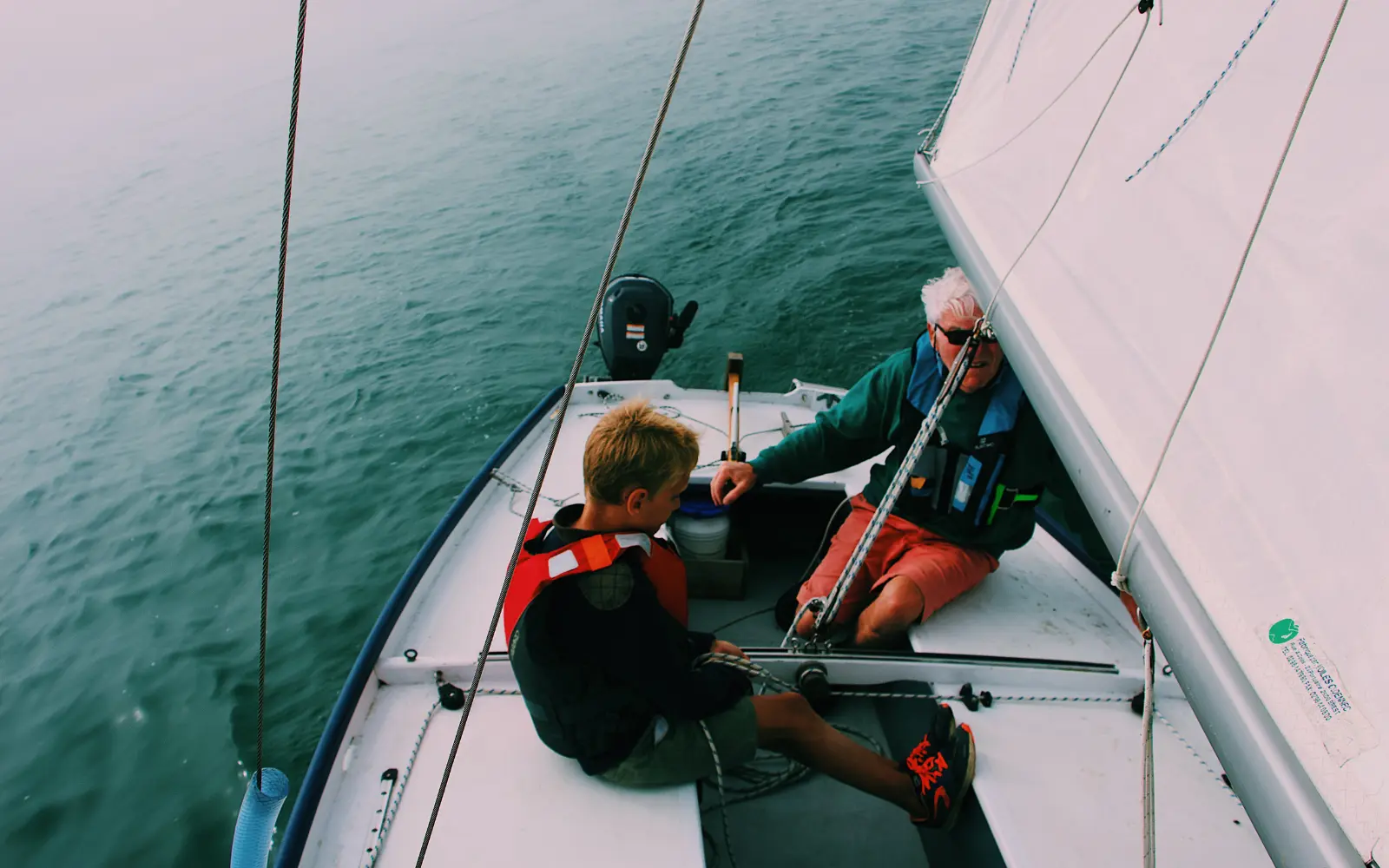
Boating is one of the last activities where real freedom comes with real responsibility. Minimum legal requirements are just that—the minimum. Structured, hands-on training in vessel handling, close-quarters maneuvering, docking, propulsion control, and emergency procedures forms the foundation for safe and confident operation. Respect for the vessel, the water, and others sharing it is inseparable from competence, without which lessons on the water are all learned the hard way.
Even when conditions are familiar, skills can atrophy. A break of months or a year can leave operators feeling unexpectedly vulnerable, and it is during these moments that latent skill and experience make the difference between a controlled maneuver and a close call. For anyone acquiring a first boat—whether a small runabout, a 40-foot cruiser, or a larger yacht—the emphasis on training, mentorship, and practice is not optional. It is the bridge between theoretical knowledge and practical, real-world competence.
Boating is not a hobby that rewards casual confidence. It demands respect, preparation, and an honest assessment of limitations. Formal training is not gatekeeping. It’s an almost-tangible closing of the skill gap and is insurance against assumptions and mistakes—a way to preserve both the vessel and human life. In the end, competence brings freedom: freedom to enjoy the water with confidence, to explore without fear, and to engage fully in a pursuit that seamlessly blends beauty, challenge, and responsibility.