If you are, like I was, a woman considering doing the Great Loop with your partner, one of the best things you can do is start learning before you ever leave the dock. You do not have to own a boat yet, and you certainly do not have to know everything. There is a natural progression to becoming a mariner, and you learn your role a little at a time.
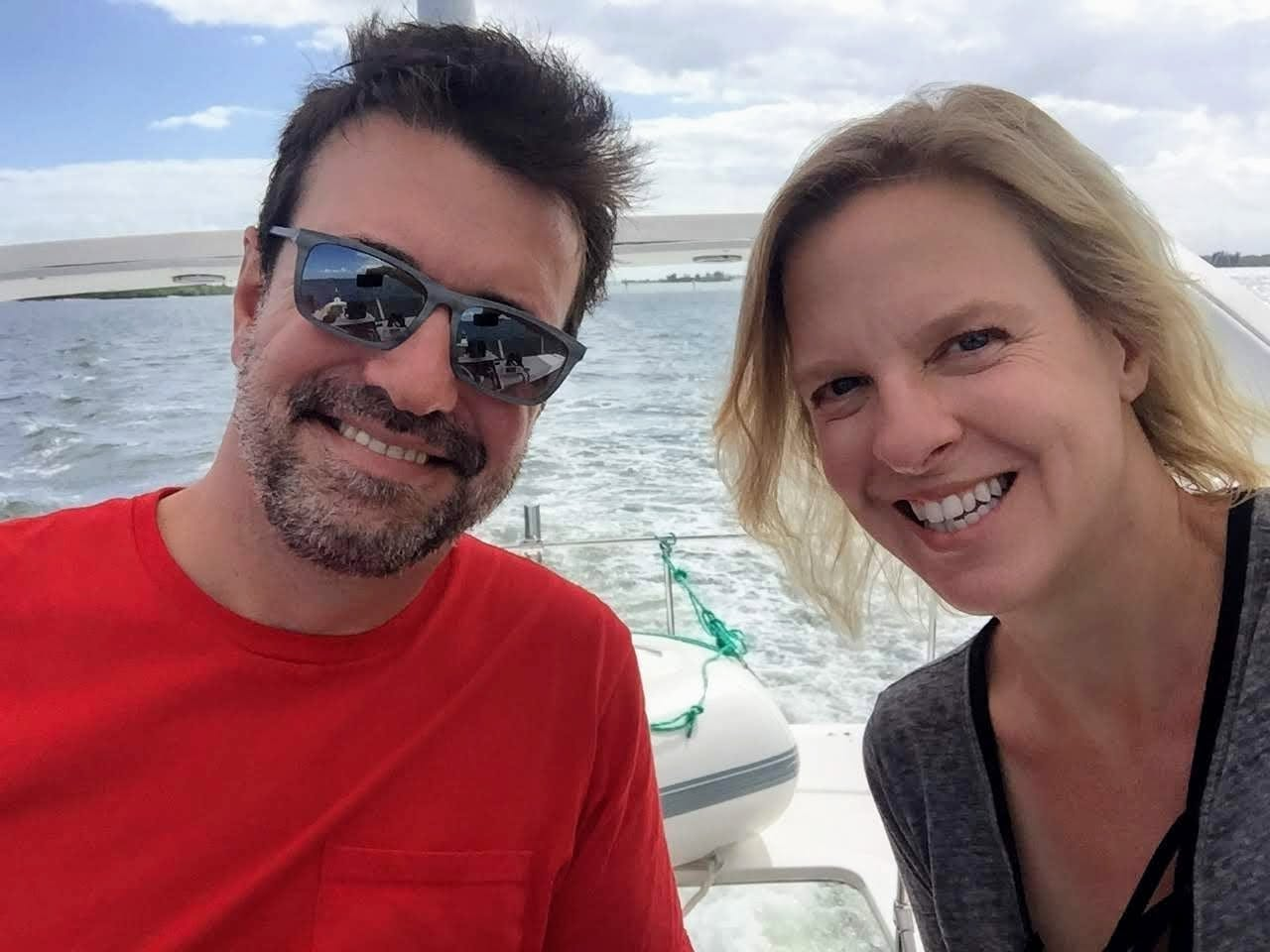
My partner, Dave, is the Captain on our boat and I am the First Mate. We have been living aboard and cruising full time for several years, and our path to where we are today was anything but direct. We started with a canoe, moved on to a small lake boat, then a go-fast boat, and eventually found our way to a heavy, seaworthy, stabilized trawler. Along the way, each boat taught us something different, and the lifestyle itself taught me what was required of me as the person sharing this life and this boat with the Captain.
I did not start out knowing how to do all of this. As we spent more time on the water, I gradually learned more about the boat, took on more responsibility, and became more comfortable with the things that needed to be done. Dave has taught me a tremendous amount, but the experience itself has taught me too. The more you participate, the more you understand, and the more naturally your responsibilities begin to grow.
Part of that progression is learning enough that you can step in when the Captain needs you. Maybe he needs a break. Maybe he is taking a shower. Maybe something unexpected happens, and he cannot be at the helm. You may not normally be the person responsible for every aspect of operating the boat, but you should be capable of stepping into that role when necessary. That confidence comes from gradually learning how the boat works and becoming comfortable with each new responsibility as it comes.
That is one of the things I love most about traveling by boat. It pushes you outside your comfort zone in ways that are both challenging and incredibly rewarding. Things that once seemed intimidating gradually become things you simply know how to do. You gain skills, confidence, and a much deeper understanding of the boat beneath your feet.
You do not need to be intimidated by everything you do not know when you start. You are not expected to arrive as an experienced mariner. Start learning what you can, take on the next thing, practice it, and then take on something else. Before long, you may look back and realize just how much you have learned.
That is why I think women considering the Great Loop should start thinking of themselves as mariners. You do not have to take on every responsibility your partner has. You do need to become an active, knowledgeable part of operating the boat, and over time you may find yourself capable of far more than you expected.
Start Learning Before You Have a Boat
One of the easiest places to start is with a marine navigation app such as Argo. With unlimited account logins allowed with a subscription, I use it every single day. I have gotten to know it as a useful way to start putting all the pieces together. You can look at a chart, follow a route, see the waterways you may travel, and begin to understand how channels, bridges, depths, currents, tides, weather, and other vessels all fit together.
Even before you have a boat, you can start playing with a route on your phone or tablet. Unlike most other apps, Argo lets you select any starting point on the water. Pick a stretch of the Great Loop and see where it takes you. Look at the channels. Look at the depths. Look at the bridges and their clearances. Check the weather, wind, waves, currents, and tides. Imagine a future of seeing other boat traffic as green icons on the Argo screen (if your boat is going to be equipped with an AIS transponder, which we recommend!) around you. You can begin learning what you are looking at long before you are responsible for a 40-foot boat.
That is one of the things I wish more people realized. You do not have to wait until you are standing on the bow of a boat to start becoming a mariner.
Learn to Plan the Route
Before we go anywhere, there is a route to think about. Where are we starting? Where are we going? What water are we traveling through? Where might we stop? What conditions could affect our plans?
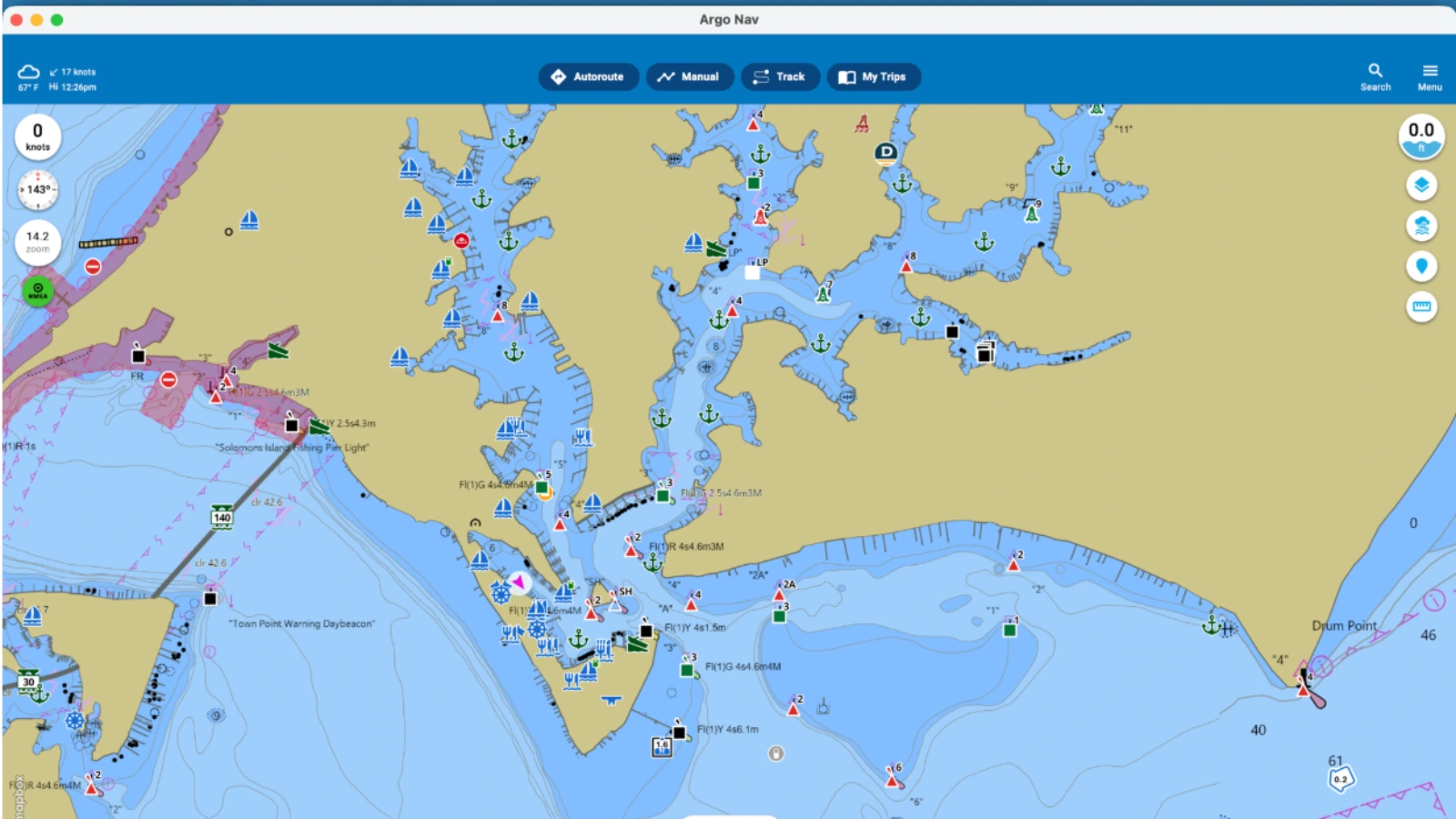
A navigation app can help you start thinking through those questions. You can choose an endpoint and follow the route between the two points, looking at what is along the way and what you may need to consider before you ever leave.
The more you do this, the more familiar the waterways become. You can click on and start recognizing what symbols on the chart mean. You begin to understand why a route takes you one way instead of another. You start noticing where the deep water is, where channels narrow, and where bridges or other obstacles will affect your timing.
Eventually, route planning stops looking like a bunch of lines on a screen and starts looking like an actual voyage.
Get Familiar With the Channel
Knowing where you are in the channel is one of those things that becomes much easier when you understand the chart before you are out there.
When we are underway, I keep track of where we are in the channel and which side we should be on based on the rules of the road. That means watching the markers, looking at the chart, and paying attention to what is happening around us. There is a free rules of the road course and test online on BoatUS!
Unfamiliar waterways can become complicated quickly. You may have commercial traffic, recreational boats, bends in the channel, shoaling areas, and changing conditions all happening at once.
The First Mate should know where the boat is, not simply where the boat is going.
This is something you can practice before you ever have a boat. Open the app, pick a waterway, and follow it. Look at the channel markers and the chart. Start learning to connect what you see on the screen with what you would expect to see on the water.
Check the Weather, Current, Tides and Depths
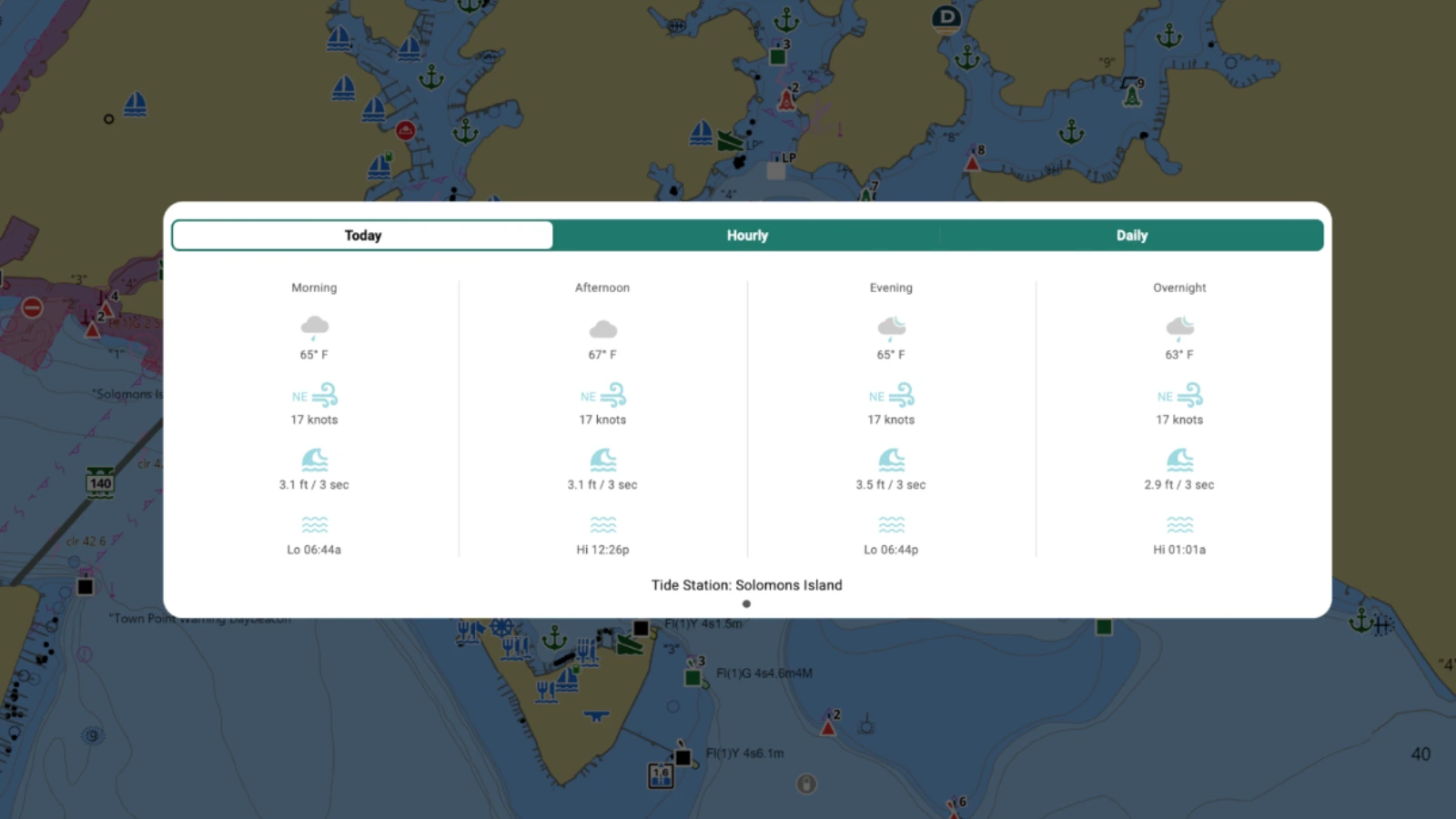
Weather is only part of the picture when you are planning a trip. Wind, waves, current, tides, and water depth can all affect what you are going to encounter.
I use the marine navigation app Argo to look at those conditions along our route. I can see what is happening now and what is expected farther along the trip, which helps us understand what we may be dealing with when we get there.
Depth is especially important because you need to understand the relationship between your boat’s draft and the water beneath it. I keep an eye on our depth while we are underway, and if I see something that concerns me, I say something.
Again, this is something you can start learning before you have a boat. Look at a chart. Check the depths. Look at the tide. See how the predicted conditions change along a route. Start noticing how much water is available and how those numbers change from one place to another. Start playing with map layers to see the map and bottom contours in different ways.
You are learning to read the water before you ever have to depend on that knowledge.
Know the Bridges
Bridges are another part of the trip that you can learn about before you ever get underway.
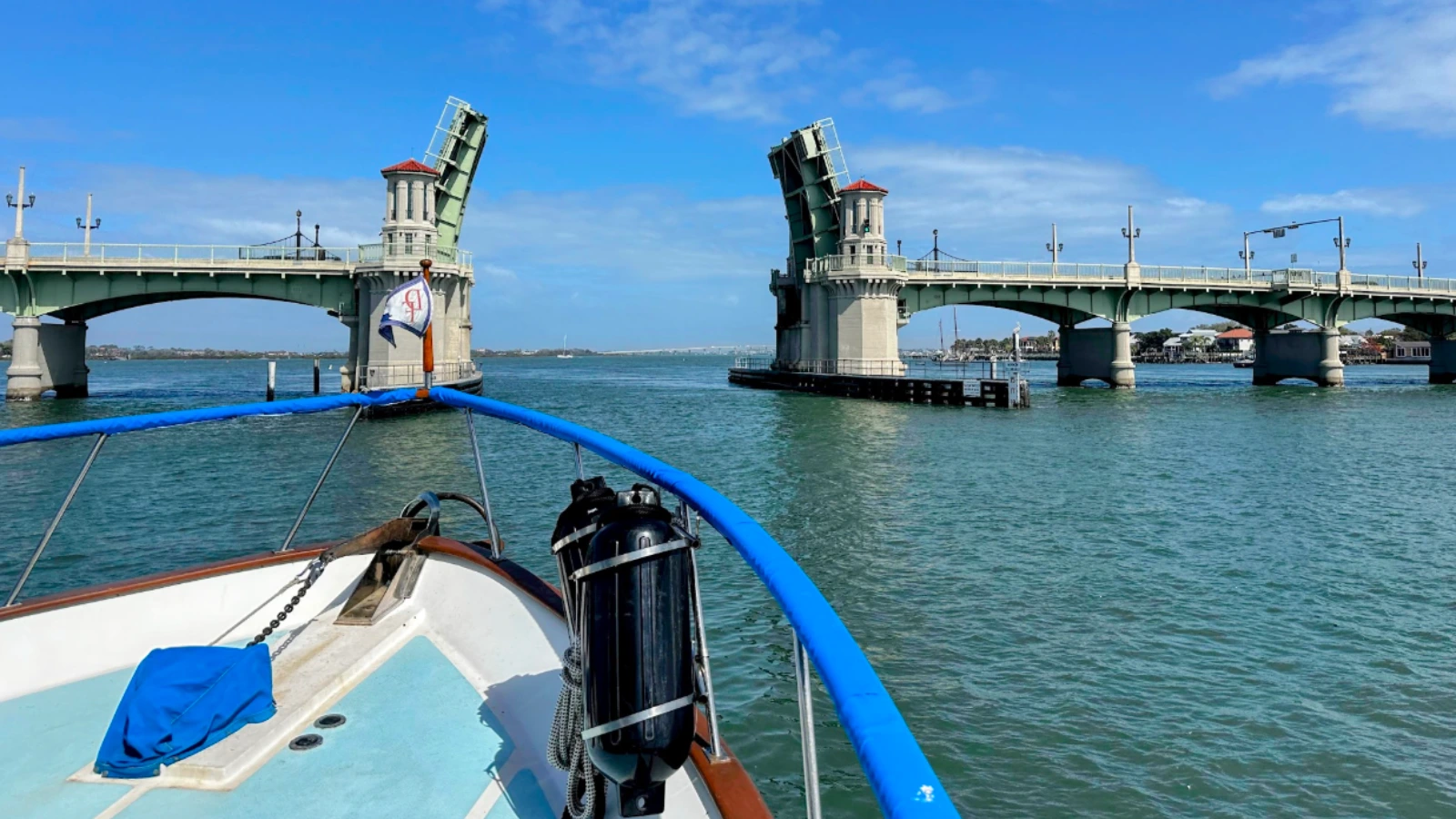
When we are planning a route, I want to know which bridges we will encounter, whether they open, the schedule upon which they open, and what their closed vertical clearance is. Then I think about our boat and what we need to do to get underneath safely.
Do we have enough clearance? Does the bridge need to open? Do we need to lower an antenna? Is there anything else on the boat that needs attention before we get there?
A navigation app can make it much easier to start familiarizing yourself with those things in advance. You can follow a route and see what is coming long before you are actually approaching the bridge.
The Loop takes you through an incredible variety of bridges, and they do not all operate the same way. Learning to anticipate them rather than discovering the details when you are already approaching makes the whole process much less stressful.
Keep Watch for What Is in the Water
Once you are actually underway, standing watch becomes another major responsibility.
I am constantly looking for things in the water that could stop us from having a good time. On the Great Loop, that can mean crab pots and other fishing gear, floating logs and deadheads, debris, or even (like on the mighty Mississippi River) submerged channel markers.
Some hazards are obvious. Others are not. A crab pot can be difficult to see. A floating log may only be visible for a moment. A channel marker can be damaged or off-station, and something that belongs in one place may not always be exactly where you expect it to be.
You learn to scan the water instead of simply looking at it. I am watching what is immediately ahead of us, farther down the channel and off to the sides. I am paying attention to what other boats are doing and looking for anything that could be hazardous in the water around us.
Learn to Watch AIS and Traffic
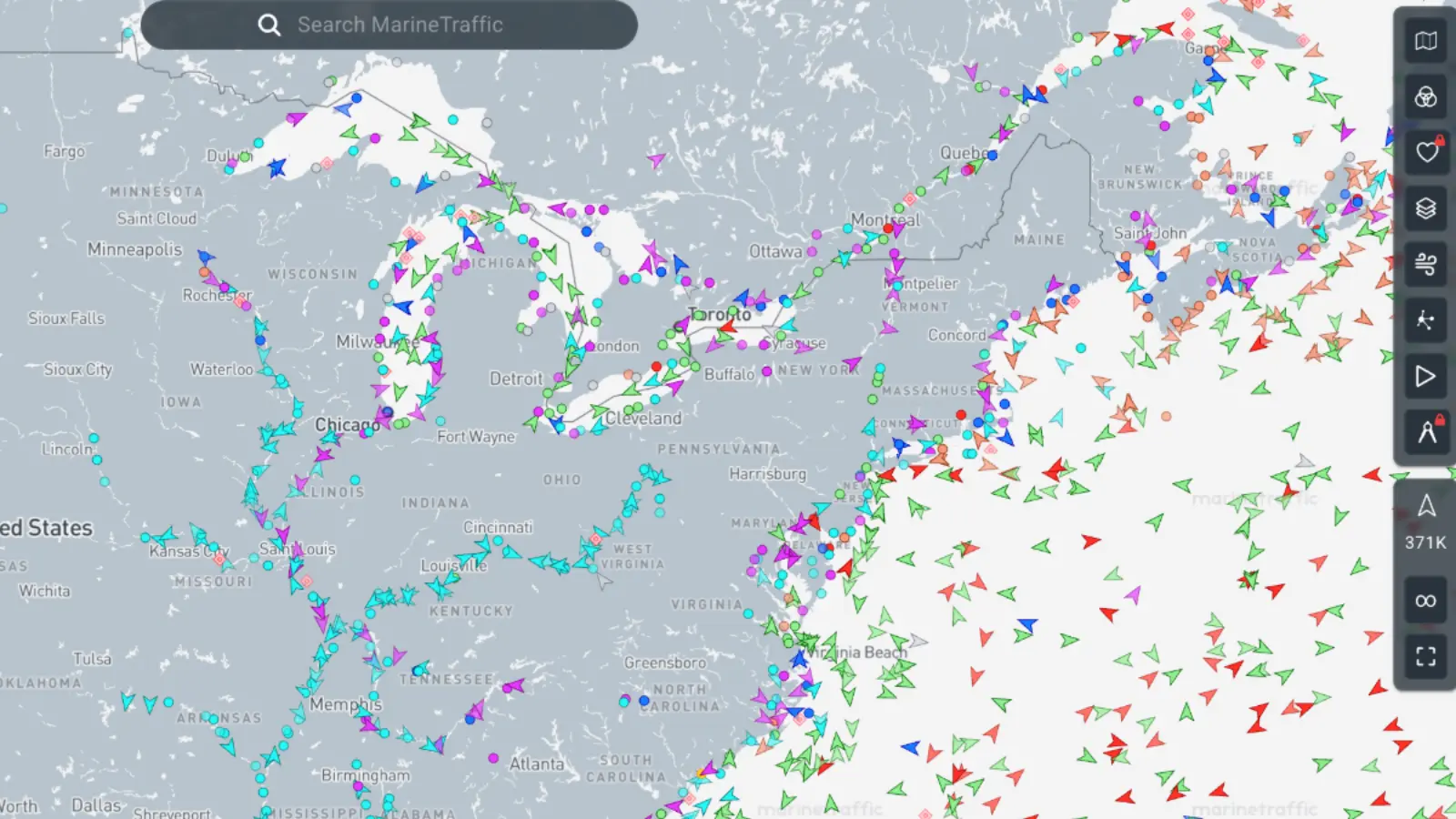
I also watch our AIS for other vessels. This is an overlay of boat traffic we have configured to show up right on Argo.
AIS gives us valuable information about the vessels around us, but it is not a replacement for looking outside. I am watching the screen and watching the water. I am paying attention to where other vessels are, how they are moving, and whether there is anything developing around us that Dave needs to know about.
This is another skill you can begin practicing in advance. Check out a free view of this on a website like Marine Traffic. Observe a busy waterway and start clicking on boat icons to learn about them! Start learning what the information means and how it relates to what you would see on the water.
Having two people paying attention is a tremendous advantage. One person may be looking at the instruments while the other sees something outside. One person may notice a vessel while the other is watching the channel. We are constantly sharing information.
Handling Lines
One of the first hands-on skills I would encourage any First Mate to learn is line handling.
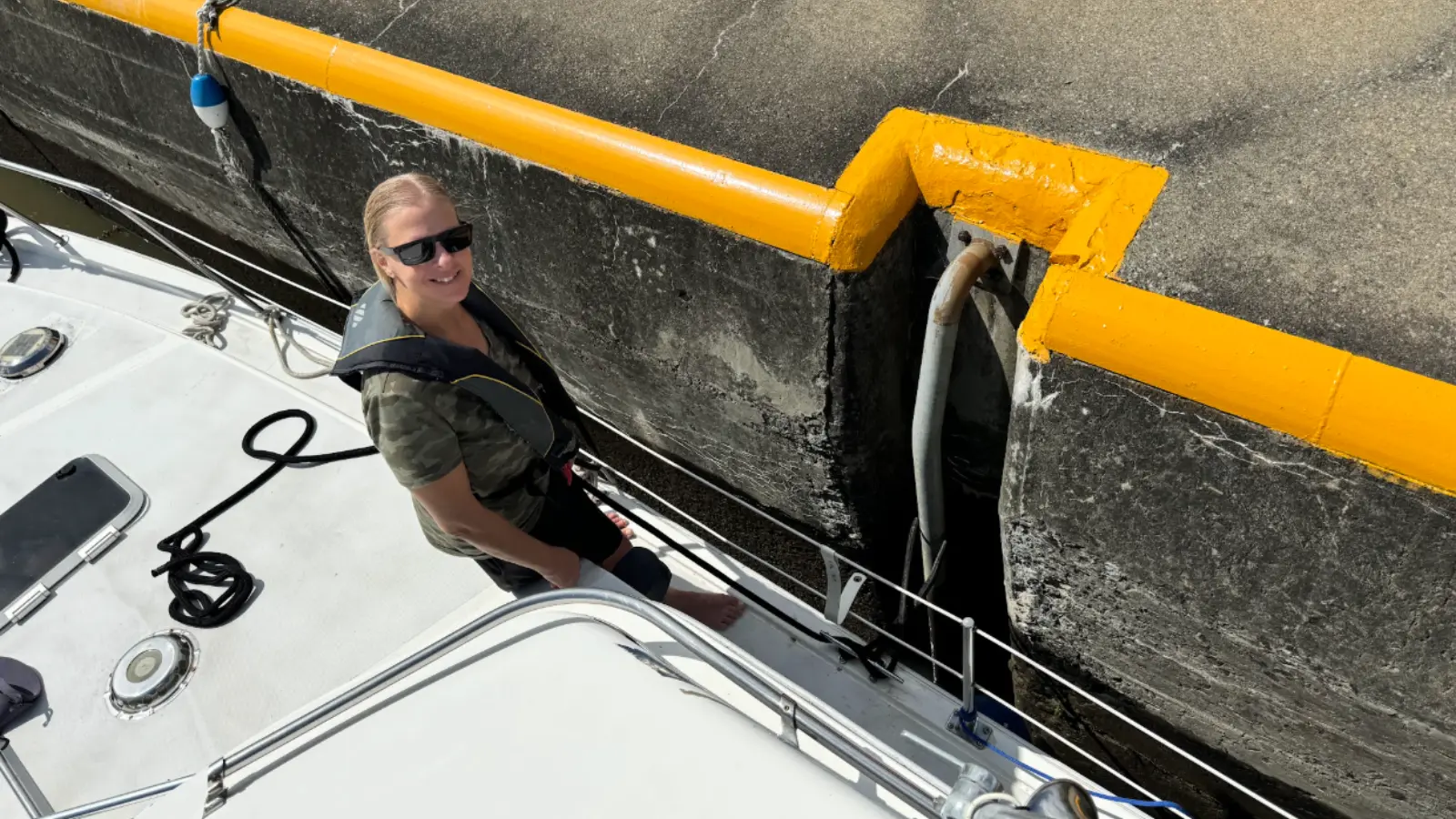
Learn how to throw a loop of line over a cleat or pile. Practice over a target. You will have to be able to do this over a variety of objects in a lock. Sometimes you will be in a position to simply drop the line over a bollard; sometimes you will have to toss it. Learn where your lines will be needed and, just as importantly, learn not to put yourself in a dangerous position trying to handle one. The cleat hitch and the clove hitch are the only knots I know perfectly and can tie even under stress. A bowline is a useful knot, but my brain cannot manipulate in three dimensions sufficiently to tie one.
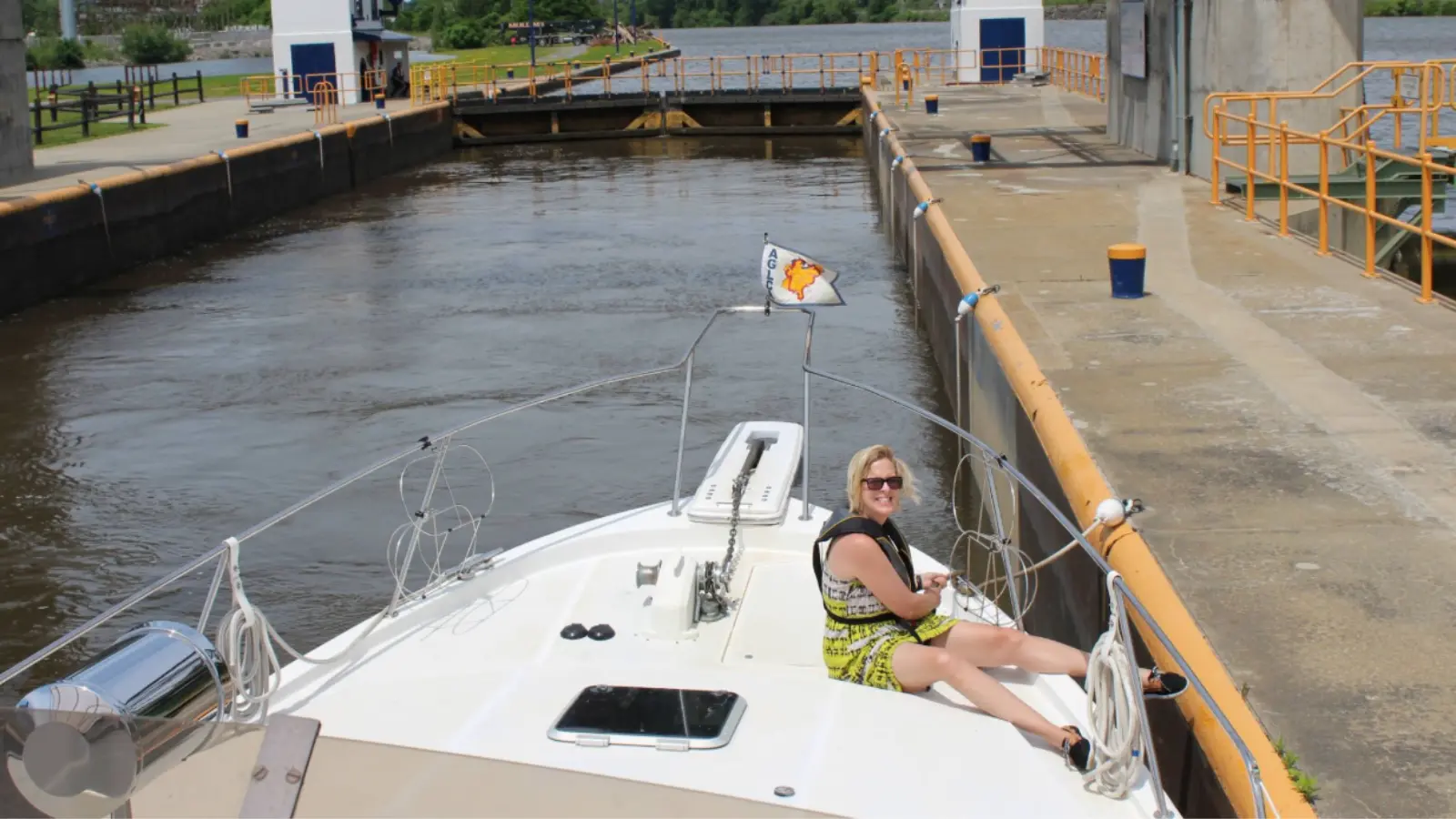
On the Great Loop, you will also encounter many different locks, where line handling becomes particularly important. You may be sharing a lock with other boats while the water level changes, and you need to understand what your line is doing and how to communicate with the person at the helm.
You need to understand the forces involved and know how to work with the boat instead of against it.
Line handling is a skill that gets dramatically easier with practice. The more you do it, the more naturally you will understand what needs to happen before the Captain even says anything.
Anchoring Is a Team Effort
Anchoring is another area where the First Mate can have a very important job.
When we anchor, Dave takes the helm, and I handle the anchor. I am up at the windlass, dealing with the chain and communicating with him about what I need from the engines.
When we raise the anchor, I watch the chain as it comes aboard and tell Dave when I need a little forward motion. That helps reduce the pressure on the windlass, which is particularly important on our boat because ours is 40 years old.
Sometimes there is only a small amount of chain left and the anchor is really dug into the bottom. In those situations, I may have Dave use the engines to help pull it free rather than asking the windlass to do all the work.
I also clean the chain as it comes aboard.
There are a number of little things that happen before we ever leave the anchorage. I make sure the anchor ball is stowed; a day shape at the bow, I place over our burgee to let other vessels know we are not underway but anchored.
I check our wind indicator, the flag at the bow, is set to move freely, and also secure the anchor with a rope in addition to the chain. That gives us another layer of security if we encounter rough water or a large wake and keeps the windlass from carrying the entire load.
Even before we start the engines, I will often remove the anchor snubber myself. We have enough battery power to do that, so there is no reason to have the engines running simply to perform a job I can safely do beforehand.
When we are in close quarters, Dave is concentrating on the boat from the helm and keeping track of the positions of the other boats. I am focused on the work happening on the bow.
We each have a job, and we trust each other to do it.
Learn the Radio
The VHF radio can be intimidating at first.
There really is such a thing as radio stage fright. You pick up the microphone, realize other people are listening, and suddenly forget how to form a sentence.
The cure is practice. Use the radio. Listen to other boaters. Get comfortable talking to marinas, bridges, locks, and other vessels. Learn the basic procedures and practice until using them no longer feels like a performance.
And listen carefully when you hear an emergency call to the Coast Guard. Pay attention to the questions they ask. Think about what you would need to know if you were the person making that call. Your position, your vessel information, the number of people aboard and the nature of the emergency are all things you may need to communicate quickly. Argo displays our position at all times, but there is a proper way to read it off to authorities.
You do not want your first real introduction to those questions to happen during an emergency.
Learn How to Pilot the Boat
Even if your partner has always been the one at the helm, learn how to pilot the boat.
You should know how your boat handles. You should know how it responds when you put it in gear, how it turns, how it stops, and how it behaves at slow speeds. You should be comfortable maneuvering it and, maybe eventually, bringing it alongside a dock.
Most importantly, you should be able to take over. Sometimes that is simply because the Captain needs a break. Sometimes it is because he is taking a shower. Sometimes I pilot the boat for long periods of time.
I am responsible for the boat during that time. I need to know where we are, what is around us, what is coming up, what the depth is, and what is happening with the traffic.
If you are cruising as part of a couple, both people should be capable of taking the helm when necessary. You may divide the responsibilities differently, but neither person should be completely dependent on the other person knowing how to operate the boat.
There is something incredibly empowering about discovering that you can handle a boat yourself. The first time you realize that this enormous machine beneath you is responding to your commands, it changes your perception of what you are capable of doing.
Have a Plan for Getting Help
We carry TowBoatUS insurance, and we even have a mariner friend who carries both TowBoatUS and Sea Tow for optimal coverage in all areas.
Whatever service you choose, know what coverage you have and know how to use it.
Being prepared does not mean you expect something to go wrong. It means you have already thought through what you will do if it does.
That same philosophy applies to almost everything on a boat. You learn where things are. You practice using them. You think through situations before they happen. Then, when something unexpected does happen, you are not starting from zero.
You Do Not Have to Know Everything Before You Start
If you are sitting in your easy chair thinking about doing the Great Loop and wondering whether you know enough, remember that you do not have to know everything before you leave.
You can start learning before you ever have a boat. You can explore routes, study charts, watch AIS traffic, learn about bridges, look at weather and tides, and start understanding how waterways work. Once you are aboard, you can add the hands-on skills, practice them, and gradually take on more responsibility.
You learn as you go. You ask questions. You make mistakes and learn from them. You get more comfortable with the radio. You get better at throwing a line. You learn how your boat handles. You figure out how your anchor behaves. You learn to read the water, the depth sounder, the charts, and the traffic around you.
And slowly, things that once seemed complicated become routine.
That is one of the most rewarding things about the Loop. The journey changes you because it asks you to keep learning.
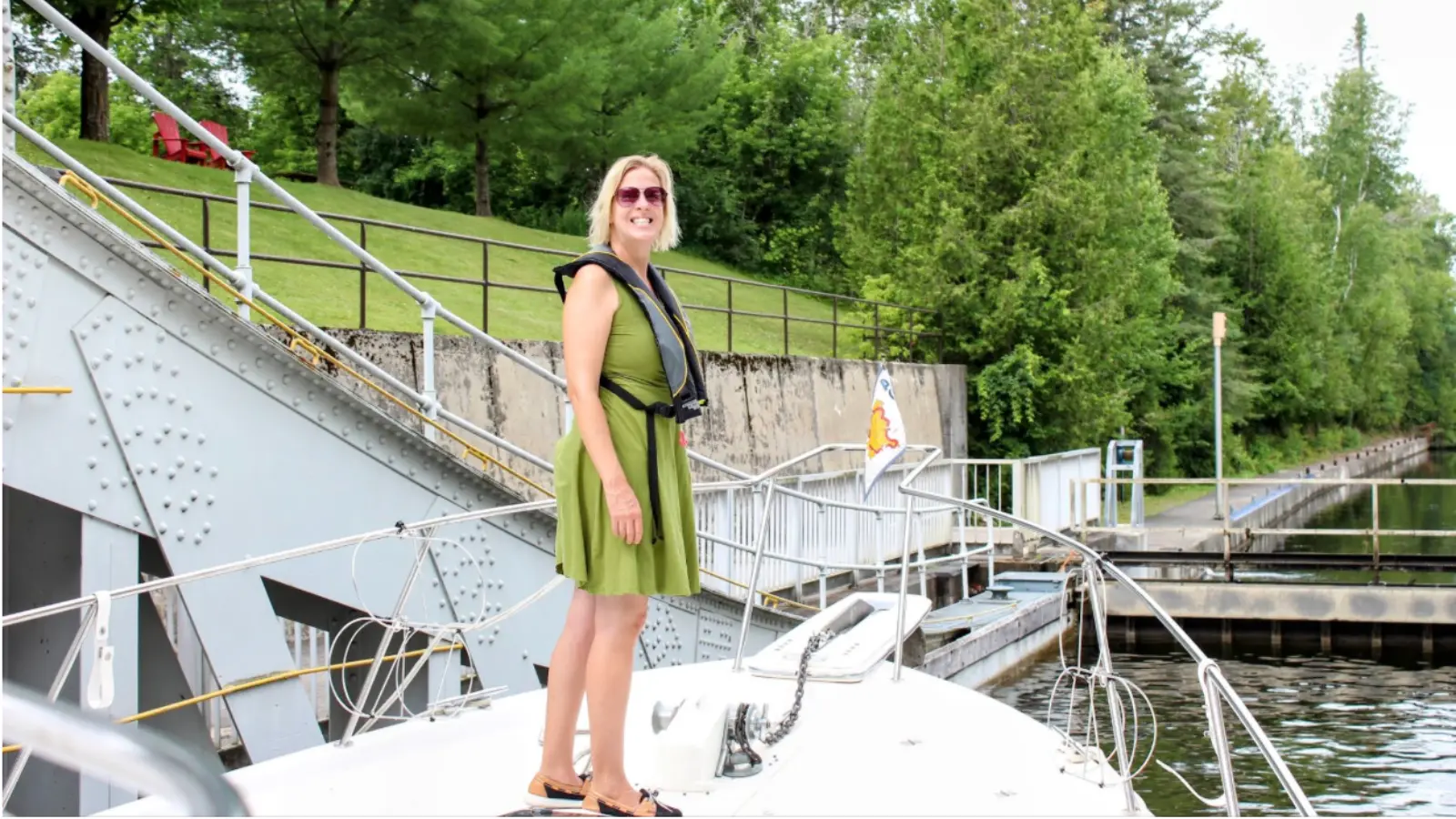
Become a Mariner
I think one of the most surprising things about this life is how much you can learn without realizing you are learning it. When we started, there were so many things I did not know. Over time, the Captain, the boat, the miles and the lifestyle itself taught me what was required of me. Each new experience added something else, and eventually I stopped thinking so much about whether I knew what I was doing and started trusting that I could figure things out.
For me, that has been one of the great gifts of living aboard and traveling this way. The boat has continually asked me to stretch a little farther than I thought I could. Every time I learn something new, my world gets a little bigger.
That is what happens when you keep pushing the edges of what you know. Eventually, what once felt intimidating becomes something you understand. Something you can handle. Something that becomes part of your everyday life.
And somewhere along the way, you stop thinking of yourself as someone who is learning to be a mariner and realize you are one.