
“All planes close up tight. We’ll have to ditch unless landfall.”
That was one of the last radio calls from Flight 19, five Navy torpedo bombers that took off from Fort Lauderdale at 2:10 on a December afternoon in 1945. Fourteen men. A routine training run.
By sunset, the lead pilot was sure both of his compasses had failed. The weather was turning, and fuel was running out. Then the radio went quiet.
None of the planes was ever found. Neither was the rescue plane sent to look for them, which went down that same night with 13 more men aboard.
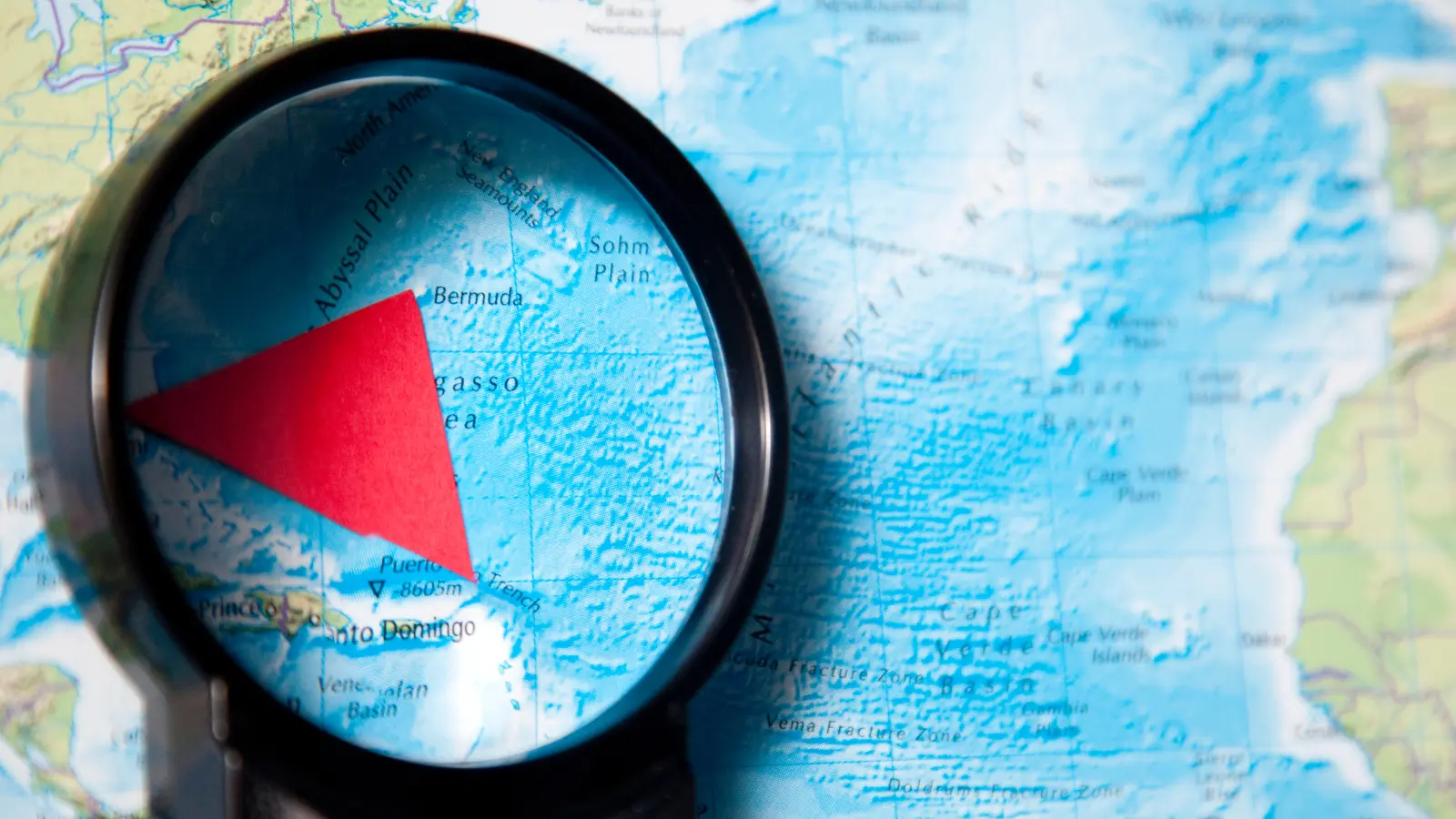
Stories like that are how a patch of ocean between Florida, Bermuda, and Puerto Rico got its nickname. So what’s actually going on out there, and should it change how you boat?
How the Legend Started
The name “Bermuda Triangle” is younger than you might think. A writer named Vincent Gaddis coined it in a 1964 magazine cover story about Flight 19.
Flight 19 wasn’t the first story, and it wasn’t the last.
 The ship that never made it to Baltimore
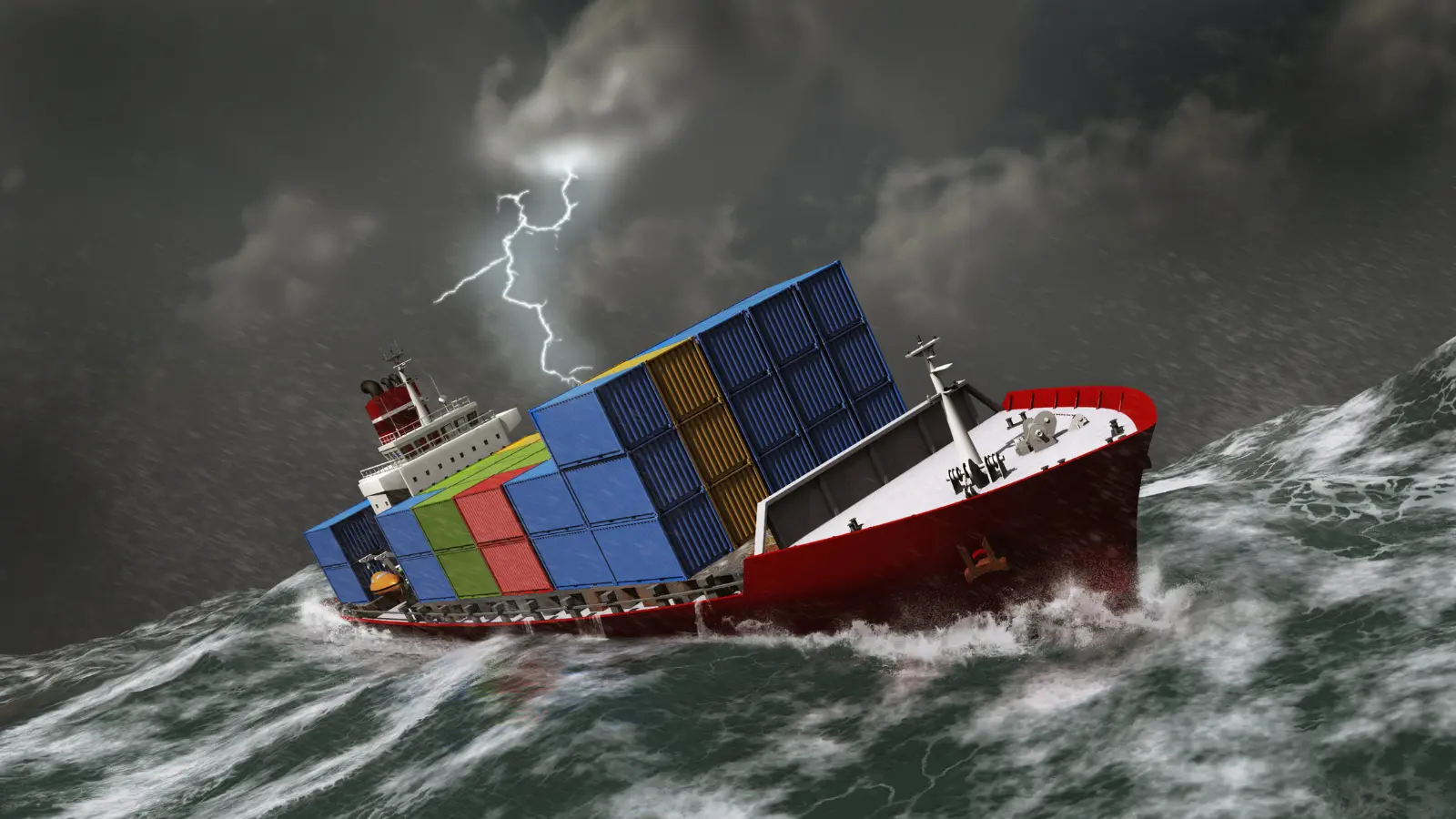
In March 1918, the USS Cyclops left Barbados bound for Baltimore. She was a Navy coal ship, about 540 feet long, with more than 300 people aboard. She was due in port around March 13.
She never showed up. There was no distress call, and no one has ever found a lifeboat, a body, or a single piece of wreckage. More than a century later, the Navy still lists the cause as unknown. It remains the largest loss of life in U.S. Navy history not tied to combat.
The boat that vanished within sight of Miami
The one that gets boaters is the Witchcraft.
Three nights before Christmas in 1967, Dan Burack took his cabin cruiser about a mile off Miami with a friend so they could look at the Christmas lights on shore. Sometime that night, he radioed the Coast Guard. His propeller had hit something, and he needed a tow.
He didn’t sound worried. They were close to shore, and the boat had extra flotation built into the hull. The Coast Guard asked him to fire a flare when they got close.
When the Coast Guard reached the spot, there was nothing there. No boat, no flare, no debris. Searchers covered hundreds of square miles over the next several days and never found a trace of the boat or the two men.
Stories like these piled up. The theories got wilder too: magnetic anomalies, methane bubbling up from the seafloor, even Atlantis.
What the Coast Guard and NOAA Say
Here’s the unspooky part. The U.S. Coast Guard doesn’t recognize the Bermuda Triangle as a real place, and there’s no official map of its boundaries. NOAA says there’s no evidence disappearances happen there more often than in any other heavily traveled stretch of ocean.
Both agencies put the losses down to the same two things: nature and human error. In a letter answering questions about the Triangle, the Coast Guard put it this way: “the combined forces of nature and the unpredictability of mankind outdo science-fiction stories.”
And the nature part is real. If you’ve ever crossed this water, you know it has a few tricks.
What Boaters Are Actually Up Against
1. A river running through the ocean
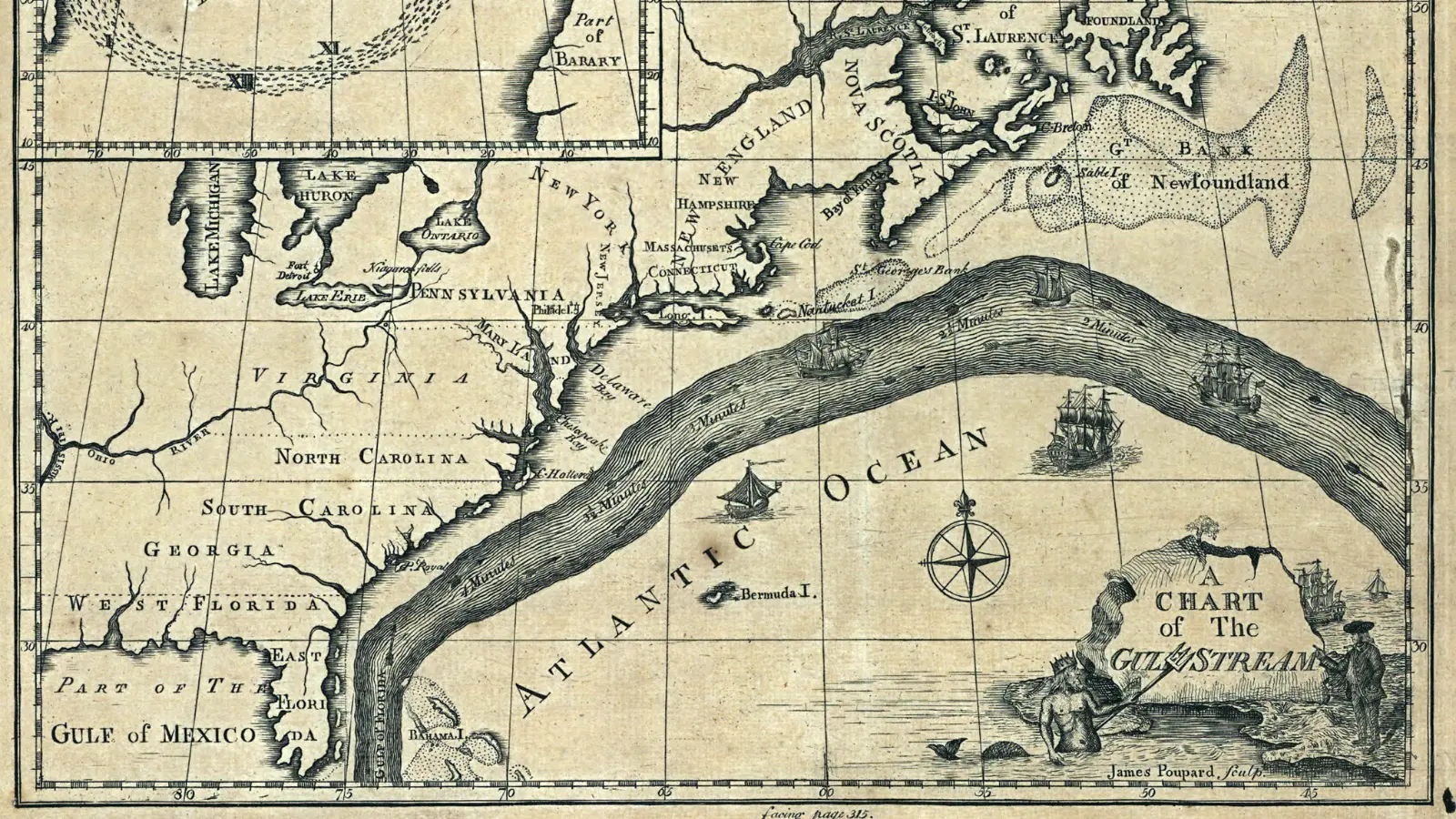
The Gulf Stream runs right along the western edge of the Triangle. It’s 40 to 50 miles wide and moves north at 2 to 4 knots.
That’s not a gentle drift. If you aim straight for Bimini from Miami and ignore the current, you’ll end up well north of where you meant to go.
Off Miami, the Gulf Stream runs closer to shore than almost anywhere else on the East Coast. That’s one likely answer to the Witchcraft. A boat that loses its prop and starts drifting there doesn’t stay put while it waits for help. No one knows for sure what happened that night, but by the time help arrived, the boat could easily have been somewhere else.
The bigger problem is wind. When a north wind blows against that northbound current, the waves stand up short, steep, and close together. According to NOAA, if the seas are 8 feet outside the Gulf Stream, they can be two or three times higher inside it. A forecast that looked fine at the dock can feel very different 15 miles out.
2. Weather that turns fast
NOAA says the Gulf Stream can cause “rapid, sometimes violent” changes in the weather. Squalls build quickly over warm water, and the Coast Guard warns that these storms can throw off waterspouts.
Most Atlantic tropical storms and hurricanes also pass through this area at some point. Before modern forecasting, mariners often didn’t see them coming.
That’s the leading theory for the Cyclops. On her last trip, she was carrying about 10,000 tons of manganese ore, which is much heavier than the coal she was built for. The Navy’s historians think a heavily loaded ship in a sudden storm may have simply rolled over and gone down too fast to radio for help.
3. Shallow banks next to very deep water
Large parts of the Triangle sit over deep ocean. Most of the seafloor is around 19,000 feet down.
But the edges are a different story. The Bahamas banks, reefs, and shoals rise up fast, and strong currents run over them. You can go from thousands of feet of water to a few feet in a short distance. The deep water is why so little wreckage has ever been found. The shallow water is where many boats get into trouble in the first place.
4. Lots of traffic, and plain old mistakes
This is some of the busiest water in the world. There are cruise ships, freighters, and fishing boats, plus a steady stream of private boats running between Florida and the Bahamas. More boats means more accidents. That would be true anywhere.
Look closely at Flight 19, and you’ll find a navigation error, not a mystery. The Navy’s first investigation blamed the lead pilot, who was “uncertain as to in what position lay the Peninsula of Florida.” He thought he was over the Florida Keys when he was actually near the Bahamas. Every time he turned to find land, he flew further out to sea. (The official cause was later changed to “causes or reasons unknown” after his family protested.)
That’s the part of the story boaters should remember. Getting lost is scary. Getting lost with weather coming in and fuel running low is how a bad day turns into a legend.
Crossing the Triangle Yourself
If you’ve ever run to Bimini or the Abacos, you’ve already crossed the Bermuda Triangle. Plenty of boaters do it every season and come home with nothing scarier than a sunburn.
The ones who have an easy time of it tend to do the same few things:
- Wait for the right window. Experienced crossers avoid any wind with north in it when they’re in the Gulf Stream. A calm morning after a front has passed is worth waiting a day or two for.
- Plan for the current. Set your course south of your destination so the Gulf Stream carries you onto your mark, not past it.
- Leave early. Afternoon squalls are common in summer. Getting across in the morning means you’re tied up before they build.
- Don’t count on cell service. Coverage fades a few miles offshore. Have your charts available offline and keep a VHF on board.
- Tell someone your plan. Leave a float plan with someone on shore: your route, when you’re leaving, and when you expect to arrive.
Where Argo Helps
Argo can’t change the weather, but it can show you what’s coming before you leave.
Premium includes 7-day forecasts for wind, waves (height and period), currents, tides, rain, and lightning. That makes it easier to pick your crossing window from your couch instead of guessing at the dock. If the wind turns north on Thursday, you’ll have an idea on Monday.
You can also share your live location with a friend or family member on shore, so someone always knows where you are.

The Scariest Thing Out There
The Bermuda Triangle doesn’t swallow boats. What catches boaters out there is a north wind against the Gulf Stream, a squall that builds faster than expected, or running low on fuel after drifting off course.
Plan for those, and the only thing haunting your crossing will be the fish that got away.
Happy Halloween from all of us at Argo.