
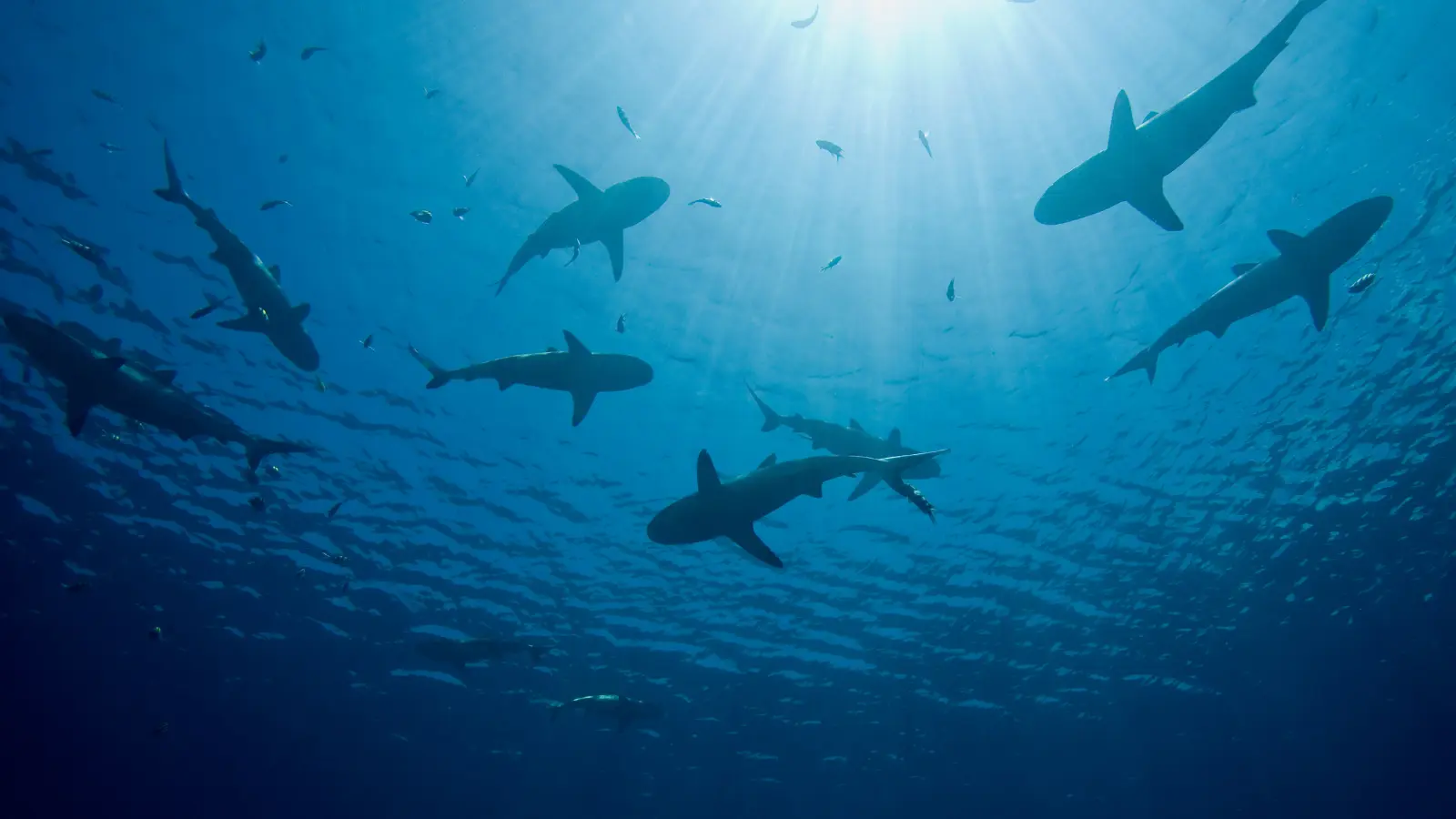
Every summer, it happens.
Discovery Channel fills the screen with great white sharks, close calls, and incredible underwater footage as Shark Week returns for another year. Whether you’ve been watching since the late ’80s or just tune in for your favorite episodes, it’s become one of the biggest traditions of the summer.
For boaters, though, Shark Week isn’t just entertainment.
The sharks featured on TV swim in many of the same waters we explore every weekend. From the Florida Keys to Cape Cod, boating gives us a front-row seat to one of the ocean’s most fascinating animals.
It’s also a good reminder that sharks aren’t just something to watch. They’re something we can experience responsibly.
In this article, we’ll look at how Shark Week began, why sharks matter to boaters, some of the best places to spot them, and what to do if you see one while you’re on the water.
Where It All Began
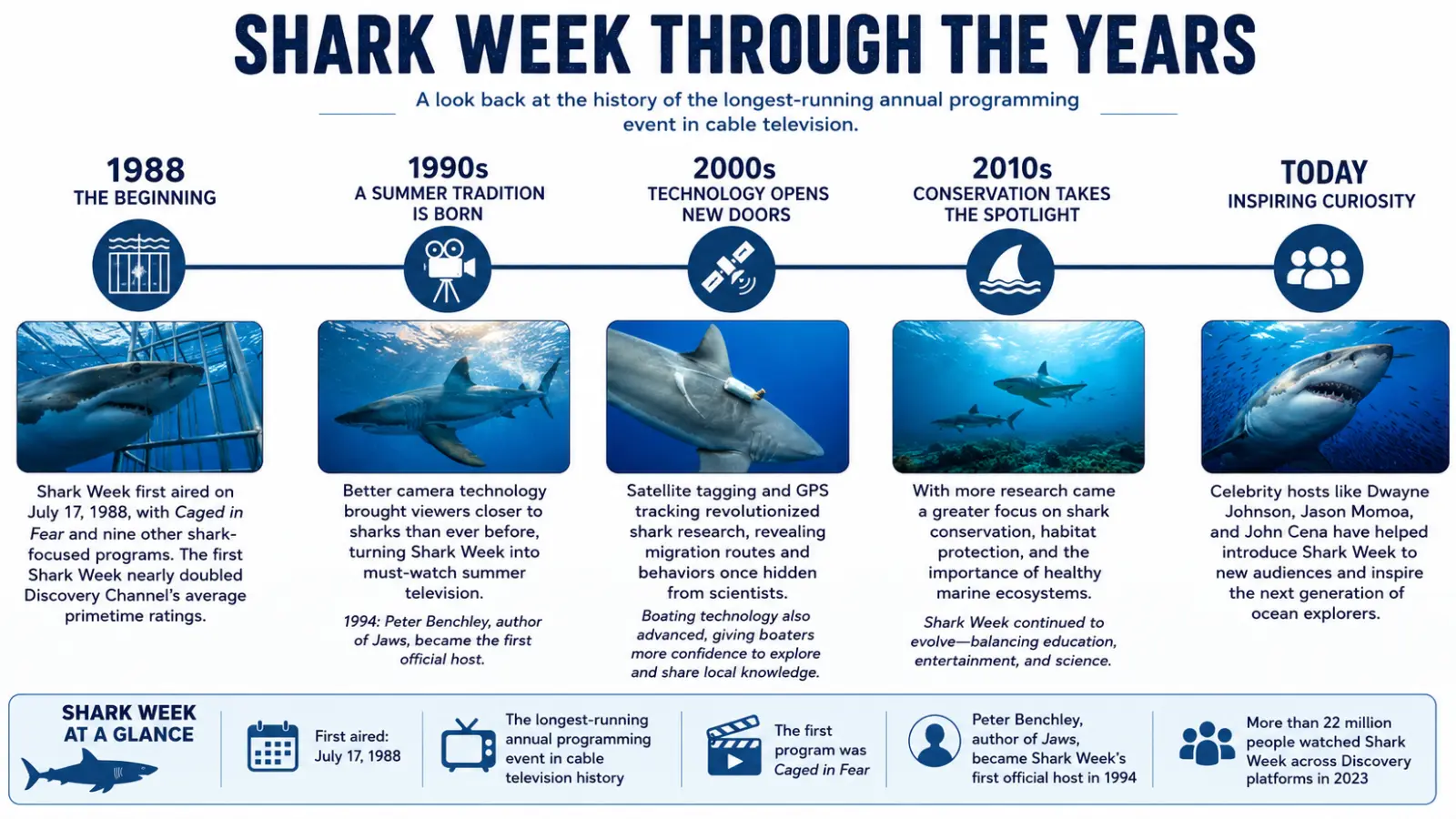
Shark Week first aired on July 17, 1988, on the Discovery Channel. The original lineup included ten shark-focused programs, beginning with Caged in Fear, which followed researchers testing a new shark cage.
The goal wasn’t to scare people. It was to replace myths with science and help viewers better understand sharks.
The idea caught on quickly. The first Shark Week nearly doubled Discovery Channel’s average primetime ratings, and what started as a one-week experiment has become the longest-running annual programming event in cable television.
From TV Event to Conservation Movement
The first Shark Week episodes focused heavily on shark biology and marine science.
As camera technology improved through the 1990s and 2000s, viewers saw sharks like never before. Scientists also began using satellite tags and GPS tracking to study migrations, giving us a much better understanding of where sharks travel and how they behave.
That technology changed boating, too.
Today’s boaters have access to digital charts, GPS navigation, and community-powered tools that make exploring easier than ever. Apps like Argo let you discover local knowledge, plan tracks, save favorite destinations, and document memorable wildlife encounters along the way.
Shark Week has also changed over the years. While some episodes have been criticized for leaning into dramatic storytelling, the event has introduced millions of people to marine conservation and inspired countless scientists, divers, and ocean enthusiasts.
Why This Matters to Boaters
If you spend enough time on the water, chances are you’ll eventually spot a shark.
For many boaters, it’s one of those moments you never forget.
Whether it’s a blacktip cruising behind your boat, a nurse shark resting near a reef, or a great white spotted off Cape Cod, seeing one in the wild is a reminder that we’re visitors in their home.
Despite what movies might suggest, sharks generally aren’t interested in people. There are more than 500 known shark species, and only a handful have ever been involved in attacks on humans.
They’re also incredibly important. As apex predators, sharks help keep marine ecosystems balanced and healthy, benefiting everything from reefs to fisheries.
What To Do If You See One
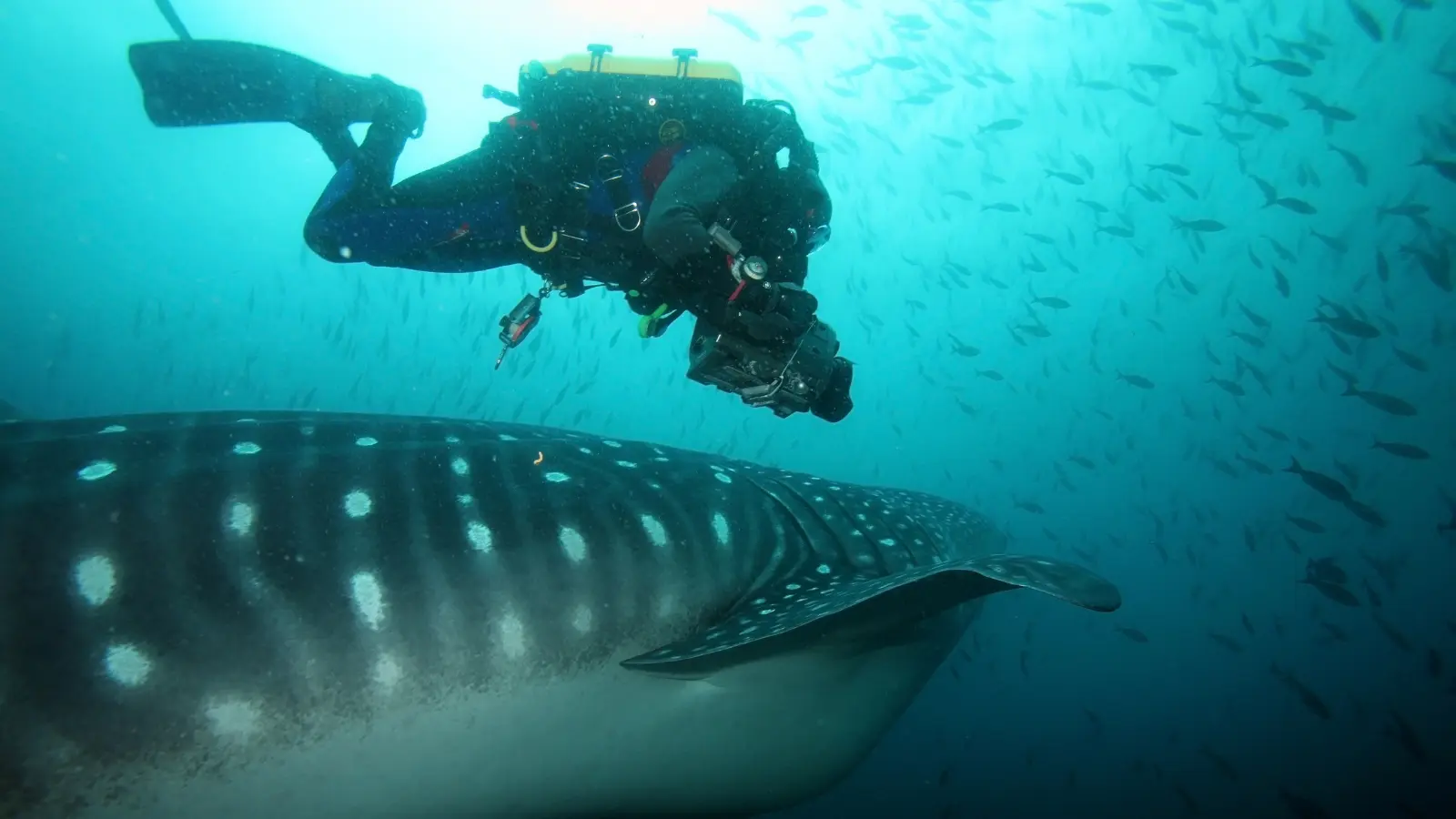
Seeing a shark is exciting, but it’s important to give wildlife the space it deserves.
If you spot one while boating:
- Watch from a safe distance.
- Never feed or approach marine wildlife.
- Be extra aware around fishing activity and fish-cleaning stations.
- Follow local wildlife advisories and regulations.
Most encounters last only a few moments, but they’re often the highlight of the day.
You can also share the sighting with the Argo community by dropping a wildlife marker. Press and hold on the map where you made the sighting, choose the wildlife marker option, select the shark icon, and add any notes or photos before saving it.
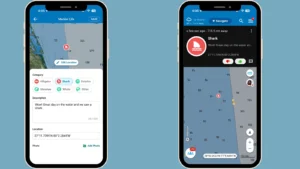
Each marker helps build a community map of wildlife encounters and gives other boaters a chance to see what has been spotted nearby. It also creates a record of your own adventures that you can look back on later.
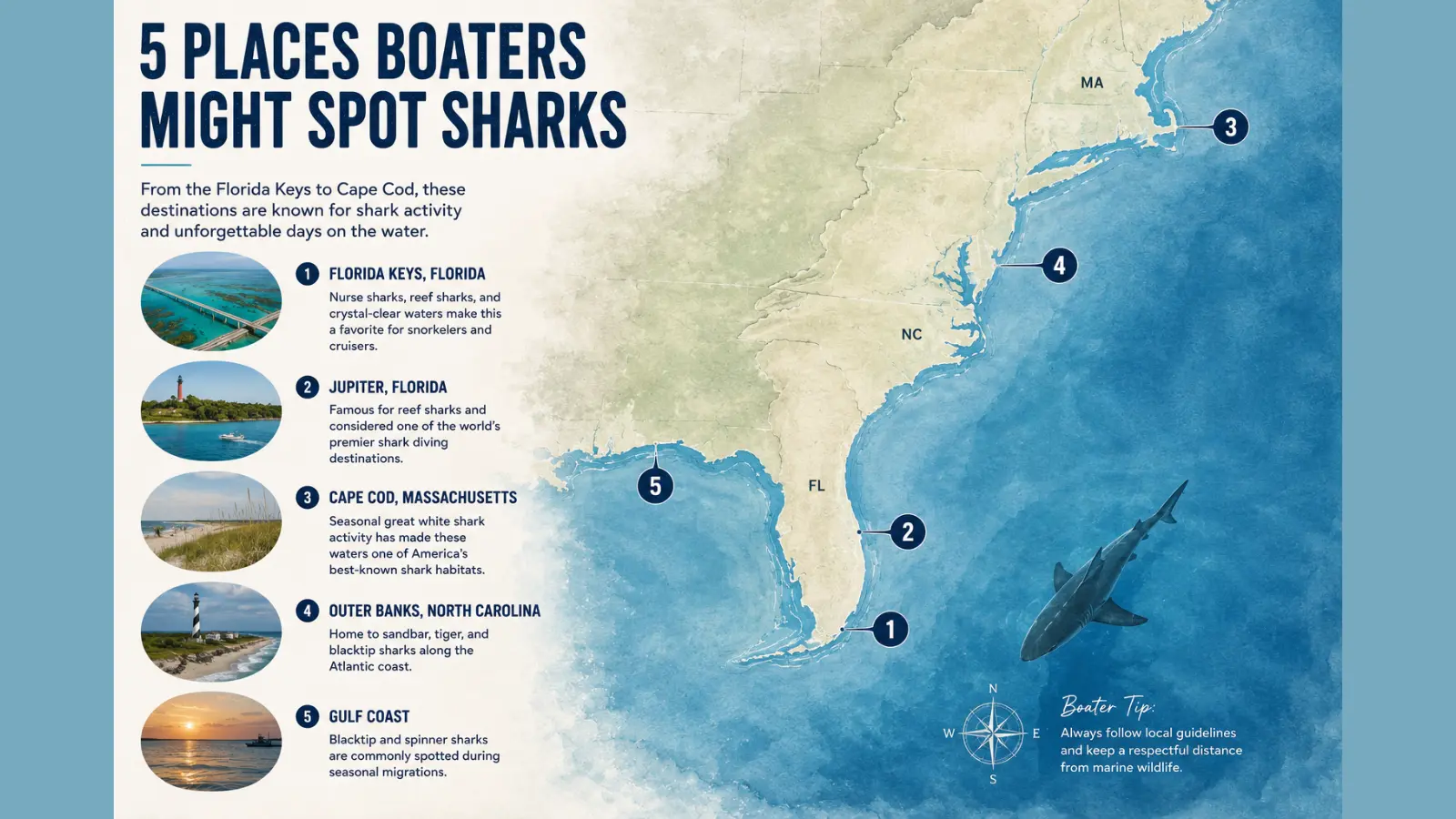
Five Places Boaters Might Spot Sharks
These destinations are among the best places in the United States to spot sharks from the water.
Florida Keys, Florida
Clear water, coral reefs, and abundant marine life make the Keys home to nurse sharks, Caribbean reef sharks, lemon sharks, and more.
Jupiter, Florida
Known around the world for its reef shark dives, Jupiter offers excellent opportunities to see sharks while boating or diving offshore.
Cape Cod, Massachusetts
Seal populations have helped attract seasonal great white sharks, making Cape Cod one of the country’s best-known shark habitats.
Outer Banks, North Carolina
Warm currents bring blacktip, sandbar, tiger, and other shark species along this stretch of coastline every year.
Gulf Coast
Blacktip and spinner sharks are common throughout much of the Gulf during seasonal migrations, especially in warmer months.
Planning a Trip?
If one of these destinations is on your boating bucket list, Argo can help you plan the trip. Explore tracks, find nearby marinas and anchorages, save places you want to visit, and discover local knowledge shared by other boaters before you leave the dock. You can even use Argo to find nearby artificial reefs, which recent research shows sharks prefer to natural reefs
Share the Experience
One of the best parts of boating is seeing something you weren’t expecting.
Maybe it’s a pod of dolphins riding your wake, a sea turtle surfacing nearby, or a shark gliding beneath the water. Those are the moments that stick with you long after you’re back at the dock.
Sharing a wildlife marker in Argo lets other boaters know what you’ve seen and where you saw it. Over time, those sightings help create a community record of the wildlife boaters encounter on the water.
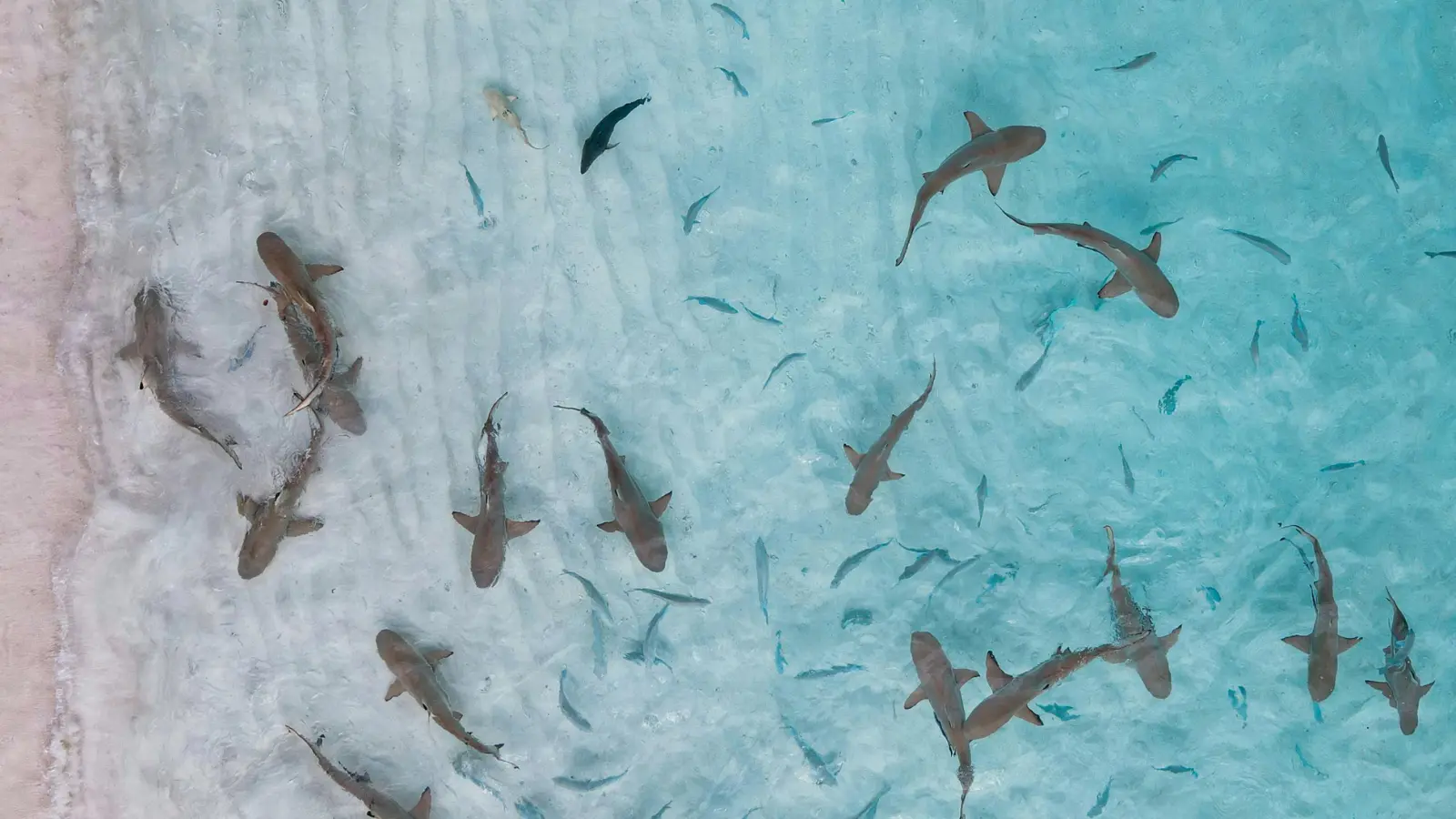
Celebrate Shark Week on the Water
Shark Week is a reminder that there’s still plenty to discover beneath the surface.
Whether you’re heading offshore for the day or cruising your favorite bay, every trip offers the chance to experience something unexpected.
The next time you’re on the water, keep your eyes open. You might spot a shark, dolphins, sea turtles, or another unforgettable piece of marine wildlife.
And if you do, share the sighting in Argo. It may help another boater know what to look for and inspire their next adventure on the water.