In 1952, two boats left Coronado, California, and went cruising.
The crews of Evening Star and Tropic Bird did something that would sound familiar to boaters today. They sent reports home about what they were finding along the way.
There was no boating app, group chat, or online cruising forum. Their friends copied the letters and passed them along to other liveaboard sailors. As more people wanted to read them, the circle grew.
Those reports eventually became the foundation of the Seven Seas Cruising Association’s Bulletin and a cruising community that has now been sharing firsthand knowledge for more than 70 years. SSCA even referred to itself in its early days as a “disorganization,” built less around the structure of a traditional yacht club and more around the idea that cruisers could benefit from one another’s experiences and discoveries.
The technology has changed considerably since then.
The instinct behind it hasn’t.
Someone goes somewhere. They learn something useful. Then they pass it along to the next boater.
That idea, cruisers helping cruisers, is one of the reasons Argo is excited to be reconnecting with SSCA.
Sometimes the Most Useful Information Isn’t on the Chart
Cruisers have always needed more than coordinates.
You can know where a harbor is without knowing what you’ll find when you get there. You can have a route planned without knowing where another cruiser found a good place to tie up, get a repair, receive a package, or solve an unexpected problem.
One story from SSCA’s Cruising Station network captures that particularly well.
While cruising through South Carolina, Alan and Michele Watson aboard Kindred Spirit dropped a camera in the water. They ordered a replacement, but that created another very cruising-specific problem: where do you send a package when your home is moving?
They looked ahead at their route and found SSCA Cruising Station hosts Rick and Carol Butler in Beaufort, South Carolina.
The Butlers agreed to receive the package. Then Rick stayed in touch with the Watsons, offered advice about the route ahead, and invited them to stay at the couple’s own dock when they reached Beaufort.
What started with a camera overboard ended with local knowledge, a place to stop, and new people to know along the way. Rick and Carol Butler were later recognized with SSCA’s Bateman Cruising Station of the Year Award for the hospitality they provided to visiting cruisers.
It’s a small story, but that may be exactly why it resonates.
Cruisers helping cruisers doesn’t always mean something dramatic. Sometimes it means accepting a package. Sharing what you know about the route ahead. Helping someone find what they need in an unfamiliar town. Or simply giving another boater a place to tie up for the night.
Those little pieces of firsthand knowledge can change an entire trip.
From Copied Letters to Connected Boaters
That kind of exchange is something we think about often at Argo.
A chart can show you where a place is. Another boater can help tell you what it’s actually like.
Maybe it’s a marina that turned out to be a great stop. A hazard worth knowing about. A restaurant within walking distance of the dock. An anchorage someone would happily return to. Or a useful place that another boater might otherwise pass right by.
Argo was built around the idea that navigation and local boating knowledge belong together. Boaters can plan routes and trips, discover places, report local information, and share experiences with other people on the water. Argo currently works throughout North America, including the United States, Canada, and the Caribbean.
In that sense, the distance between those early SSCA letters and the way boaters share information today isn’t as great as it might seem.
The tools changed.
The value of hearing from someone who has actually been there didn’t.
Sometimes the Stakes Are Much Higher
Of course, a connected cruising community becomes even more valuable when something goes wrong.
On July 15, 2026, the approximately 50-foot sailboat Vester Kyesten lost engine power about eight nautical miles north of Trinidad’s First Boca. Strong currents were pushing the boat farther offshore and potentially toward waters near Venezuela.
Jesse James, president of the Marine Services Association of Trinidad and Tobago, began coordinating help. He contacted the Trinidad and Tobago Coast Guard, alerted the cruising community, established communication with the disabled boat through Starlink, and arranged for a local fishing vessel to head offshore.
As the fishing vessel searched, updated coordinates continued to come in.
Then came the message everyone was hoping for: the rescue vessel had Vester Kyesten in sight.
SSCA described the coordinated response as a successful maritime rescue effort and credited the local mariners, Coast Guard personnel, cruising community, and Jesse’s ability to connect them quickly when help was needed.
That is obviously a very different situation from finding somewhere to ship a camera.
But both stories reveal something important about cruising.
Local knowledge matters. Connections matter. And there is real value in being part of a community where someone else may know the waters, know the harbor, know who to call, or simply have been there before.
A Conversation That Started Years Ago
Argo founder Jeff Foulk first connected with SSCA years ago, when the organization invited him to speak during the Covid era.
At the time, Argo and SSCA occupied somewhat different corners of the cruising world.
Argo’s community was concentrated largely among boaters traveling closer to home, while SSCA had long included sailors and cruisers making extended passages throughout the Caribbean and around the world.
A few years later, that connection feels increasingly relevant.
As Argo thinks about where boaters want to go next and how the app can better support longer and more adventurous trips, SSCA offers something particularly valuable: the perspective of people who are already making those journeys.
These are cruisers who know what changes when a weekend trip becomes a longer passage, when familiar waters give way to unfamiliar ones, and when firsthand information becomes even more important.
For Argo, reconnecting with SSCA is an opportunity to listen.
What do experienced cruisers want to know before entering an unfamiliar harbor? What information do they rely on when planning farther from home? What have they learned that no cruising guide could have told them beforehand?
Those are exactly the kinds of conversations worth having as we think about what comes next.
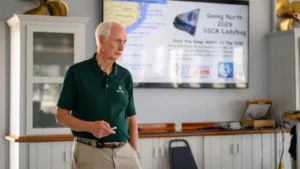
Continuing the Conversation at the Chesapeake Bay GAM
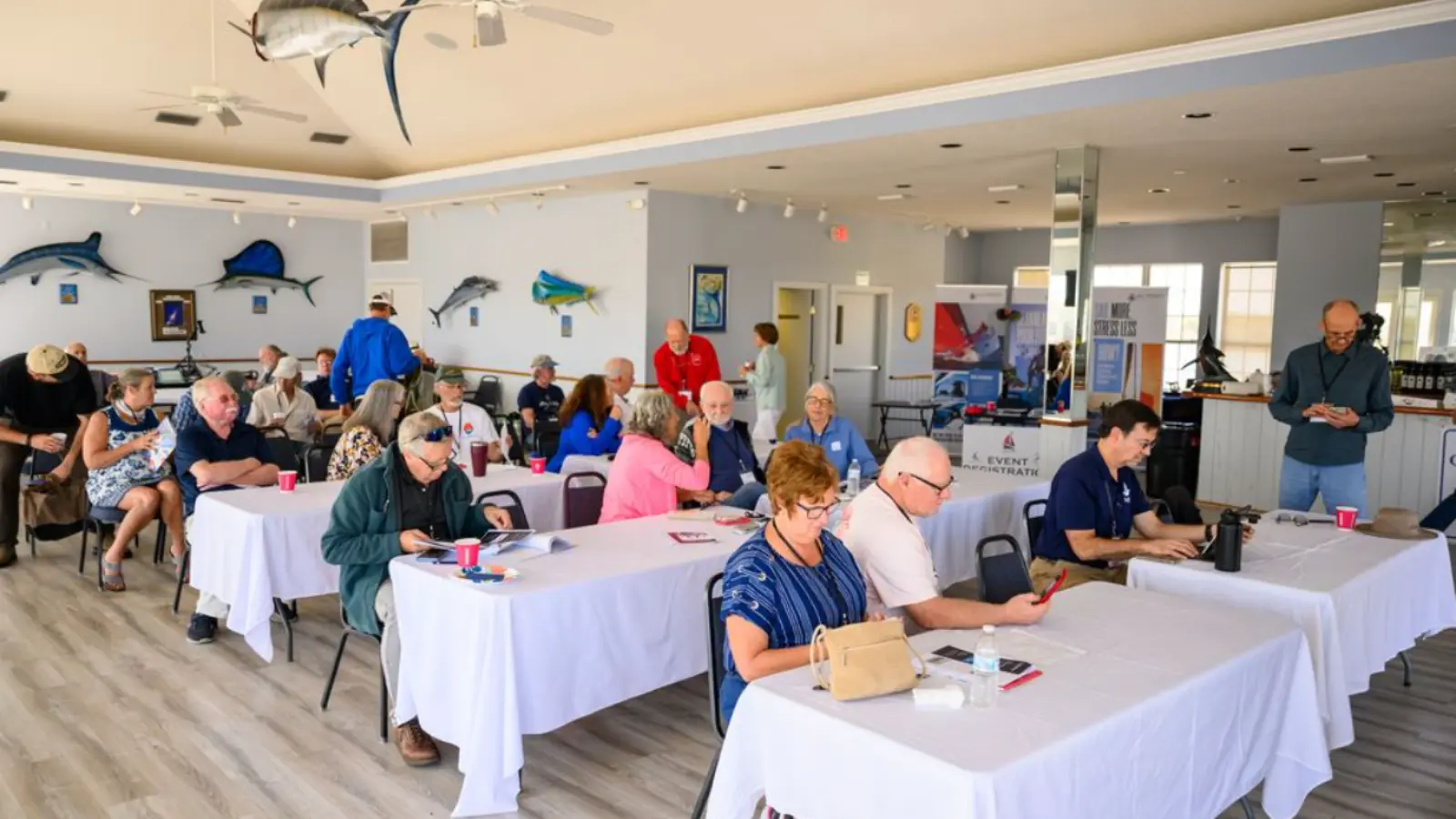
The next part of that conversation happens October 2 through 4, 2026, at the Chesapeake Bay GAM in Pasadena, Maryland. SSCA describes the GAM as an event designed both to help people preparing to cruise and to bring experienced cruisers together.
Argo will be there to speak, meet SSCA members, and share more about what we’ve been working on, including an early look at what’s ahead for Caribbean chart data.
But we’re just as interested in the conversations that happen before and after the presentation.
Some of the cruisers there will have traveled the same waters dozens of times. Others may be preparing for their first long trip south. Each will have their own way of planning, navigating, finding places, handling surprises, and passing along what they learn.
That is the knowledge we want to hear.
Participating in the GAM isn’t only an opportunity to show cruisers what Argo can do. It’s an opportunity to ask experienced boaters what Argo should do next.
Cruisers Helping Cruisers, Then and Now
There is something fitting about the fact that SSCA began with a couple of boats sending information home.
Evening Star and Tropic Bird went cruising. They learned things along the way. Their friends thought those experiences were useful enough to copy and share with someone else.
Then someone else shared them again.
Seventy-four years later, information can move from one boat to thousands of others in seconds. We can plan routes on our phones, save places we want to visit, record where we’ve been, and hear from boaters we may never have met in person.
But underneath all of that technology is a very old idea.
You find something worth knowing, and you pass it along to the next boater.
That was at the heart of SSCA in 1952.
And as Argo looks toward what comes next, it’s a tradition we’re excited to learn from.
Alan and Michele Watson, Kindred Spirit, and Rick and Carol Butler’s Beaufort Cruising Station story
July 2026 Vester Kyesten rescue near Trinidad
All photos provided by SSCA.